Normal delivery or caesarean: how the decision is actually made

India has one of the fastest-rising caesarean rates in the world, and also women who need one and cannot get one. Here is what actually drives the decision, and what to ask.
When a caesarean is genuinely needed
Absolute reasons, decided in advance: placenta previa (the placenta covering the cervix), certain kinds of previous uterine surgery, a transverse-lying baby that cannot be turned, some twin presentations, and specific maternal conditions your obstetrician will explain.
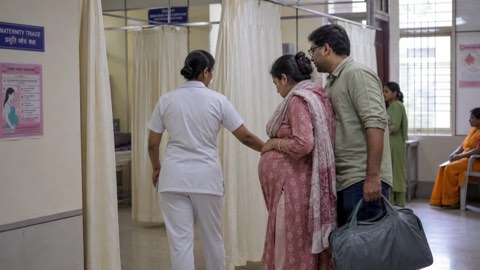
Emergency reasons, decided during labour: fetal distress on monitoring, labour that is not progressing despite adequate contractions, cord prolapse, heavy bleeding, or a sudden rise in blood pressure. These are decisions made in minutes, and they save lives.
Relative reasons where judgement varies: breech presentation (where turning is not possible or has failed), a big baby with a small pelvis, previous caesarean, and induction that fails. This is the grey zone where practice differs most between hospitals and doctors.
India's caesarean picture
National survey data shows caesarean rates in India's private hospitals far above the public system and far above what the WHO considers medically explicable at population level — while some rural areas still lack access to a caesarean when one is genuinely required. Both problems exist at once.
What drives unnecessary caesareans: convenience of scheduling, fear of litigation, staffing patterns, financial incentives, and — commonly in India — auspicious dates and times chosen by families. Elective surgery for an auspicious muhurat carries real risk to a baby delivered early.
This is not an argument for refusing a caesarean when it is advised. It is an argument for asking the question: what specifically makes this necessary, and what happens if we wait?
What the difference means in practice
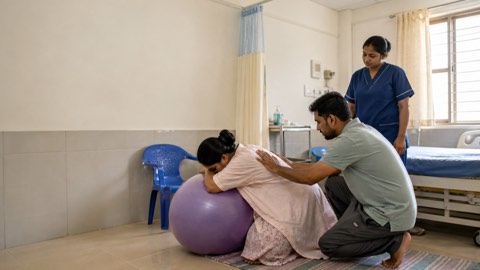
Vaginal birth: shorter hospital stay (typically one to two days), faster recovery, earlier mobility, less blood loss, and easier early breastfeeding. Costs: perineal tearing or episiotomy, pelvic-floor loading, and unpredictable timing.
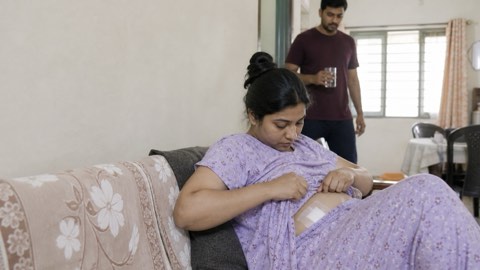
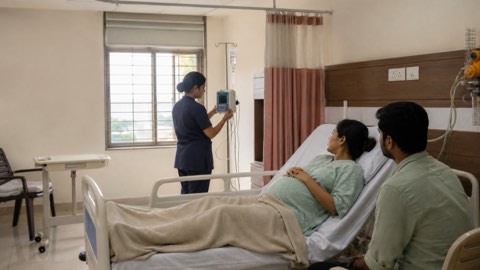
Caesarean: it is abdominal surgery. Expect a two to four day stay, six weeks of restricted lifting, a scar that stays numb for months, more pain in the first week, and more difficulty with early feeding positions. Risks include infection, bleeding, clots, and implications for future pregnancies — each additional caesarean raises the risk of placental problems in the next.
For the baby, planned caesareans before labour begins are associated with slightly more breathing difficulty in the newborn period, which is one reason elective caesareans are not scheduled before 39 weeks without a medical reason.
Questions to ask, and preparing either way
If a caesarean is proposed in advance: what specifically indicates it; what happens if we wait for labour; what is your hospital's caesarean rate; can I attempt a vaginal birth with monitoring; and — if the date is being chosen — why this date, and is it at least 39 weeks?
If it is proposed during labour: is this an emergency or is there time to discuss; what are we seeing on the monitor; what happens in the next thirty minutes if we wait. In a genuine emergency there is no time and you should consent quickly — that is what emergency means.
Prepare for both outcomes. A birth plan that only imagines a normal delivery leaves a woman feeling she failed if surgery is needed. It is not a failure and it is not a lesser birth; it is the route the situation required.
Practical preparation: know the hospital's caesarean costs and what insurance covers, ask about skin-to-skin in theatre (increasingly offered), and know that breastfeeding after a caesarean works well with the right positions — ask for help early.
When to see a doctor
In pregnancy, go immediately for: bleeding, severe abdominal pain, waters breaking, reduced fetal movements, severe headache with vision changes, or contractions before 37 weeks. Any of these may change the delivery plan and all need same-day assessment.
After a caesarean, see a doctor urgently for: fever, a scar that is red, opening or discharging, heavy bleeding, severe abdominal pain, one-sided calf pain or swelling, chest pain or breathlessness. See our caesarean recovery guide for the full list.
This article is general information, not medical advice, and is no substitute for personal medical advice. For any decision about your or your child's health, please consult your doctor.
Frequently asked questions
Can I refuse a caesarean my doctor recommends?
You can decline any procedure, but ask first what the specific risk of waiting is. In genuine emergencies, minutes matter and the recommendation is sound. Where it is a grey-zone decision, a second opinion earlier in pregnancy is more useful than an argument in the labour room.
Is VBAC possible in India?
Yes — vaginal birth after one caesarean is offered in many hospitals for suitable candidates (one previous low transverse incision, no other complications, and facilities for emergency caesarean). Discuss it early, because not every hospital or doctor supports it, and the choice of hospital largely decides whether it is on the table.
How many caesareans can a woman safely have?
Each one increases risks of adhesions, placenta accreta and other complications. Many obstetricians are cautious beyond three. Discuss future pregnancies at your postnatal check.
The family wants a specific date for religious reasons.
Say plainly that delivery before 39 weeks without a medical reason raises the baby's risk of breathing problems and NICU admission. Where a date must be chosen, ask the obstetrician to pick a medically safe window and let the family choose within it.
Sources
Every clinical figure on this page is taken from the guidelines below. Where our numbers and your doctor's differ, ask which guideline they follow.
- WHO. WHO Statement on Caesarean Section Rates (2015)Backs the claim that caesarean rates in India's private hospitals are far above what WHO considers medically explicable at population level, and that both overuse and lack of access coexist.
- ACOG. ACOG Committee Opinion No. 764: Medically Indicated Late-Preterm and Early-Term Deliveries (2019)Backs the claim that elective caesareans should not be scheduled before 39 weeks without a medical reason, due to increased risk of neonatal breathing difficulties.
- NICE. Caesarean section (NICE guideline NG192) (2021)Backs the descriptions of absolute and relative indications for caesarean, VBAC candidacy criteria (one previous low transverse incision, no other complications, facilities for emergency caesarean), and risks of repeated caesareans including adhesions and placenta accreta.
- RCOG. Birth After Previous Caesarean Birth (Green-top Guideline No. 45) (2015)Backs the VBAC eligibility conditions stated on the page and the caution about increasing risks of placental complications with each successive caesarean.
- NHS. Caesarean section – Recovery (2023)Backs the post-caesarean recovery details (two-to-four day hospital stay, six weeks restricted lifting, warning signs requiring urgent review including fever, wound problems, heavy bleeding, calf pain, chest pain) and the comparison of recovery with vaginal birth.
- MoHFW. Caesarean Section Rates in India – Guidance and Initiatives under LaQshya and NHM (2023)Backs the observation that caesarean rates in Indian private hospitals greatly exceed those in the public system and that access to caesarean in rural areas remains inadequate.
Reviewed by
- Nakul Phatak — CEO, theAsianparent India & IndonesiaHead of theAsianparent India; father of one
- Roshni Chugani — Head of Marketing, theAsianparent India & Singapore12 years in the mother-and-baby space; mother of two
Published by: theAsianparent editorial team