Raising an only child: the myths, the real challenges, and what helps

Only children are not spoilt, lonely or maladjusted — the research is clear. The genuine challenges are different, and manageable once you know what they are.
What the evidence says
Decades of research find only children score as well as or better than children with siblings on achievement, intelligence and self-esteem, and no worse on sociability or adjustment. The 'spoilt only child' is a stereotype from a single flawed nineteenth-century study that has outlived its evidence by a century.
Family size in India has fallen sharply — the national fertility rate is now around two — so one-child families are increasingly ordinary, whatever the relatives say.
Reasons for one child are nobody else's business: fertility, health, age, finances, marital circumstances, or simple preference. You are not required to explain.
The real challenges
Social practice. Siblings provide constant low-stakes rehearsal for sharing, conflict and negotiation. An only child needs those opportunities engineered: playdates, cousins, group activities, a neighbourhood friend group, sport teams, and unsupervised play with other children rather than always with adults.
Adult company. Only children spend more time with adults, which builds vocabulary and confidence but can also mean less experience of being a child among children, and sometimes more anxiety absorbed from adult conversation. Watch how much adult worry is being discussed in their hearing.
Concentrated expectation. All the family's hopes, ambitions and anxieties land on one child — every mark, every match, every decision. This is the single most important thing to manage, and it is the one most families miss.
The future: an only child will eventually manage ageing parents alone. Plan for it practically — your own savings, health insurance, and a will — rather than making it their unspoken burden.

What helps
Build the peer network deliberately: regular time with the same group of children, sleepovers with cousins where safe, and activities that involve teams rather than solo performance.
Do not over-schedule to compensate. Only children benefit from unstructured, boring, self-directed time — it is where imagination and self-reliance are built.
Say no sometimes, for practice. It is easier to indulge one child, and children of any family size need to encounter limits, wait, and be disappointed occasionally.
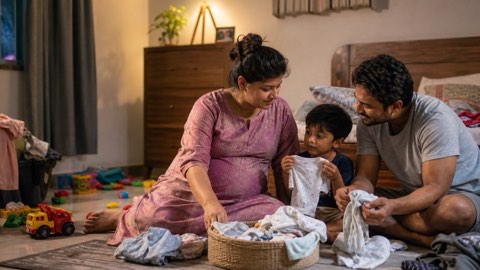
Give responsibility and chores. Only children can drift into being served by a household of adults; real tasks prevent it.
Deliberately dilute the intensity: keep your own interests and friendships, avoid narrating the child's every achievement to the family, and check that conversations at home are not entirely about them.
Handling the questions
'When is the second one coming?' is asked relentlessly in Indian families, often within a year of the first. A short, unapologetic answer — 'we're happy as we are' — repeated without elaboration, ends it faster than any explanation.
Where infertility, loss or health is the reason, you owe no one that information. 'That's a personal matter' is a complete sentence, and anyone who persists has answered for themselves.
Do not let the questions be asked in front of the child, and if they are, correct the implication straight away: 'we have exactly the family we want.' Children absorb the suggestion that something is missing.
And if your child asks for a sibling — many do — answer honestly and simply, without guilt: 'we're not going to have another baby, and we are a whole family as we are.' Then help them build the friendships that meet the same need.
Frequently asked questions
My only child struggles to share. Is that the classic problem?
Sharing is hard for all young children; only children just get less daily practice. Arrange regular play with the same children, let them work out disputes with minimal intervention, and it evens out quickly.
Should we have a second child so the first is not alone?
Only if you want a second child. Siblings are not guaranteed companions — some are close, some are estranged — and a child born as a solution to a problem is a heavy start. Build friendships instead.
My only child prefers adult company and seems bored with children her age.
Common, and worth gently correcting: children need children. Choose activities where the group does something together rather than performing for adults, and step back from mediating.
How do I avoid putting all my ambition on one child?
Notice the pattern first — whose goal is the entrance exam, the medal, the music grade? Keep your own projects and friendships, praise effort rather than outcomes, and say explicitly and often that your affection does not depend on achievement.
Reviewed by
- Nakul Phatak — CEO, theAsianparent India & IndonesiaHead of theAsianparent India; father of one
- Roshni Chugani — Head of Marketing, theAsianparent India & Singapore12 years in the mother-and-baby space; mother of two
Published by: theAsianparent editorial team