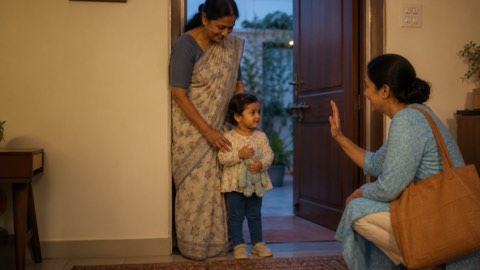
When a trusted nanny leaves: managing the transition

For a small child, a nanny leaving is the loss of someone they love. It is worth treating as that rather than as a staffing problem.
Take the loss seriously
A child who has been cared for daily by the same person for a year or two has an attachment to them. When that person leaves, the child grieves — and small children grieve in behaviour rather than in words: clinginess, sleep problems, regression, anger, or asking for her repeatedly.
Adults often minimise it because the person was employed. The child does not experience the employment relationship; they experience the person who fed them and comforted them going away.
Expect it to take a few weeks to a couple of months, and expect it to be worse if the departure was sudden.
Telling the child
Tell them in advance where possible — a few days for a toddler, a week or two for an older child. Sudden disappearance is much harder than a known ending.
Keep it simple and honest without detail they cannot carry: 'Didi is going to work somewhere else. She will miss you and you will miss her.' Do not say she is going on holiday or will come back if she is not.
Do not blame the nanny in front of the child, whatever the circumstances of the departure. The child's relationship is separate from the adults' dispute.
Allow a goodbye: a last day that is marked, a photograph together, a small gift from the child. A proper ending helps enormously.
If she is willing and it is appropriate, one phone call or visit a few weeks later helps some children a great deal — and for others it reopens it. Follow the child.
The handover and the new person
Overlap by a few days if you can, with the old carer showing the new one the routine while the child watches. It signals approval, which children read.
Keep everything else the same for a few weeks: the routine, the meals, the sleep arrangements, the toys. One change at a time.
Be present more than usual for the first fortnight of a new carer, and do not leave a new person in sole charge immediately — for safety as much as for settling. See our domestic-help guide for the verification checklist.
Expect the child to compare and to reject the new person for a while. Do not force affection or scold them for it; warmth builds over weeks.
And write down the routine for the new carer: feeds, naps, words the child uses, comfort object, allergies, emergency numbers. Most transition problems are information problems.
Frequently asked questions
She left without notice and my child keeps asking.
Answer honestly and consistently, each time, without irritation: 'She has gone to another job. She is not coming back. You miss her.' Repetition is how young children process a loss.
My child seems more attached to her than to me.
Common with a full-time carer, and it does not displace you. Protect a daily window that is yours, and take the attachment as evidence that your child was well looked after.
Should I let them stay in touch?
If the relationship was good and both sides want it, an occasional call or visit is kind. If it unsettles your child each time, taper it.
How do I reduce the disruption next time?
Have more than one adult the child is comfortable with, keep the routine written down, and build in a proper notice period in the arrangement from the start.
Reviewed by
- Nakul Phatak — CEO, theAsianparent India & IndonesiaHead of theAsianparent India; father of one
- Roshni Chugani — Head of Marketing, theAsianparent India & Singapore12 years in the mother-and-baby space; mother of two
Published by: theAsianparent editorial team