10 nut-free snacks for a classroom with allergies

A nut-free rule in a classroom is there because for one child in that room, a trace can be an emergency. Here is how to comply without a boring box.
Why the rule exists
For a child with a serious nut allergy, a small amount — on a shared hand, a wiped table, a swapped snack — can trigger anaphylaxis, which is a life-threatening emergency requiring adrenaline and hospital.
Children swap food constantly, whatever the rules say, and small children touch everything. That is why the restriction covers the whole class rather than the affected child's desk.
It is a nuisance for the other families and it costs about ten minutes of planning. It is worth doing properly.
Ten snacks that work
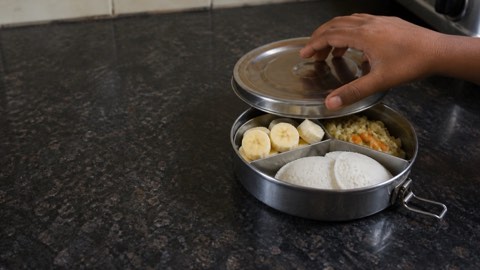
1. Roasted chana with a pinch of chaat masala. 2. Murmura chivda made with curry leaves and til, without peanuts. 3. Makhana roasted in ghee. 4. Cheese cubes with cucumber sticks. 5. Boiled corn with lemon and salt.
6. Fruit — banana, orange segments, guava, apple slices with a squeeze of lemon so they do not brown. 7. Idli with podi, checking the podi has no peanut. 8. Dhokla cubes. 9. Curd with fruit in a leak-proof box (winter). 10. Seed mix of roasted til, pumpkin and sunflower seeds, where the school permits seeds.
For sweetness without nuts: dates, raisins, gud-and-til chikki only if seeds are allowed and nuts are not in the mix, or a small home-baked item made in a nut-free kitchen.


Reading labels and avoiding cross-contamination
Hidden nuts turn up in: chikki and Indian sweets, chocolate spreads, some biscuits and cakes, packaged chivda and namkeen mixes, some chutneys and gravies, certain protein bars, and anything fried in groundnut oil.
Look for 'may contain traces of nuts' or 'made in a facility that processes nuts' — for a severely allergic classmate, those count.
In your own kitchen: use a clean board and utensils, wash hands after handling nuts, and do not prepare a nut dish alongside the tiffin. Wipe the outside of the box, which is what other children touch.
Teach your child not to share food at school when there is an allergy in the class — that instruction matters more than the contents of the box.
Parties, festivals and the birthday box
Ask the class teacher before sending anything for a birthday, and send packaged items with a readable label rather than home-made if the school prefers it — many now do, precisely because they cannot verify ingredients.
Good options: fruit, a small non-food item like a pencil or a sticker set, or an approved packaged snack.
For festival distributions — laddoos, chikki, barfi — check with the teacher first. Most Indian sweets contain nuts as standard.
When to see a doctor
Emergency, call 108 and give adrenaline if prescribed: difficulty breathing, wheeze, a hoarse voice, swelling of lips, tongue or throat, widespread hives with vomiting, or a child who becomes pale and floppy. Go to hospital even if they improve after the injection.
If your own child has a diagnosed allergy: keep a written emergency plan and an in-date auto-injector at school, make sure at least two staff know where it is and how to use it, and see our food-allergy guide for the full management.
This article is general information, not medical advice, and is no substitute for personal medical advice. For any decision about your or your child's health, please consult your doctor.
Frequently asked questions
My child will only eat peanut butter.
Try roasted chana powder, til or sunflower-seed spread where seeds are permitted. And keep the peanut butter for weekends and evenings at home.
Is it really necessary for the whole class?
For a severely allergic child, yes. Children share and touch; a rule that applies to one desk does not work.
What about groundnut oil?
Highly refined groundnut oil is generally considered safe for most peanut-allergic people, but schools may still exclude it. Ask rather than assume.
How do I explain it to my child?
Simply and without resentment: a classmate can become very ill from something ordinary, so the class keeps it out. Children accept that easily when adults do not grumble about it.
Sources
Every clinical figure on this page is taken from the guidelines below. Where our numbers and your doctor's differ, ask which guideline they follow.
- NICE. Food allergy in under 19s: assessment and diagnosis (CG116) (2011)Supports the recommendation that a child with a diagnosed food allergy should have a written emergency plan and an in-date adrenaline auto-injector available, with trained staff aware of its location and use.
- NHS. Anaphylaxis – treatment (2023)Backs the emergency instruction to call for help and administer adrenaline if prescribed upon seeing symptoms such as breathing difficulty, swelling of the lips, tongue or throat, and widespread hives, and to go to hospital even after improvement.
Reviewed by
- Nakul Phatak — CEO, theAsianparent India & IndonesiaHead of theAsianparent India; father of one
- Roshni Chugani — Head of Marketing, theAsianparent India & Singapore12 years in the mother-and-baby space; mother of two
Published by: theAsianparent editorial team