Why no food in pregnancy can make a baby fair

Saffron in milk, white foods, no tea, no coffee. There is an entire industry built on the promise of a fair baby, and it rests on nothing.
What actually determines skin tone
Skin colour is set by genetics — the amount and type of melanin produced, governed by genes inherited from both parents. It is decided at conception, before a woman knows she is pregnant, and nothing eaten afterwards alters it.
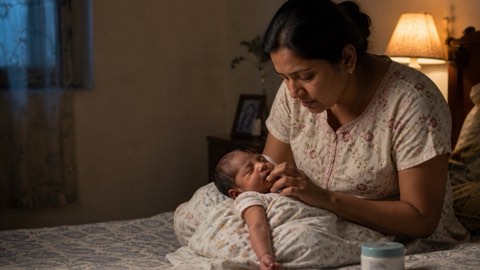
Newborns often look lighter at birth and darken over the first months as melanin production ramps up. That change is normal development and is frequently mistaken as proof that something the mother did or stopped doing worked.
Babies of the same parents can have visibly different skin tones, because of how the genes combine. That is ordinary genetics, not a comment on either pregnancy.
The specific claims
Saffron in milk. The most persistent one. Saffron does not affect skin colour. In normal culinary amounts it is harmless; in the large doses some women are pushed to take it is not, and very high doses of saffron have been associated with harm. Expensive and pointless.
White foods — milk, coconut water, white pumpkin. Coconut water is a good hydrating drink and milk is a good calcium source. Neither changes the baby's colour.
Oranges and other citrus. Useful vitamin C. No effect on skin tone.
Avoiding coffee, tea, chocolate, dark-coloured foods or 'hot' foods. No effect on the baby's colour. Restricting nutritious foods for this reason risks a poorer diet at a time when iron, protein and calcium genuinely matter.
Fairness creams, ubtan applied to the bump, and supplements marketed for a 'glowing baby'. No effect, and skin-lightening products can contain mercury or steroids that are unsafe in pregnancy.
The harm underneath
This is colourism, and it does not stop at birth. Children who grow up hearing about their colour absorb it, and darker-skinned daughters in particular carry it for life.
It puts blame on mothers: if the baby is dark, someone will say she did not drink enough milk or ate the wrong things. That is a fabricated fault and it lands on women at their most vulnerable.
It costs money that could go on iron and protein, and it fills the pregnancy with restrictions that have nothing to do with health.
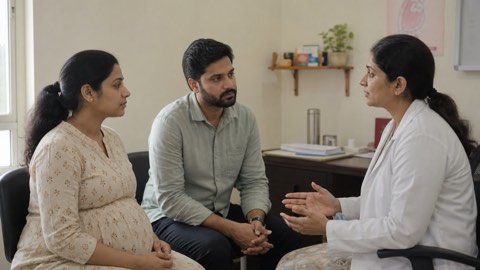
The most useful response to relatives is short and repeated: the doctor says it is genetic and nothing changes it. And the more important line, later, is what a child hears at home about their own skin.
When to see a doctor
Speak to your doctor before taking any supplement, herbal preparation or large quantity of saffron in pregnancy, and about any skin product you are using, particularly fairness creams and anything containing steroids or unlabelled ingredients.
Same-day: bleeding, severe abdominal pain, severe vomiting, or a reaction after taking any preparation.
And a newborn with yellowing of the skin or eyes needs checking for jaundice, which is a medical matter and not a question of complexion.
This article is general information, not medical advice, and is no substitute for personal medical advice. For any decision about your or your child's health, please consult your doctor.
Frequently asked questions
My mother-in-law insists saffron works.
She has watched newborns lighten at birth and darken later, which is normal for every baby. Culinary saffron is harmless; taking it in large amounts for this reason is not worth the risk.
Is coconut water good in pregnancy?
Yes, as a hydrating drink with some potassium. Drink it because it is pleasant, not for the baby's colour.
My newborn is much darker than at birth. Is something wrong?
No. Melanin production increases over the first months, and darkening is normal.
Can I use fairness cream while pregnant?
Avoid it. Some contain mercury, hydroquinone or steroids that are not safe in pregnancy, and none of them affect the baby.
Sources
Every clinical figure on this page is taken from the guidelines below. Where our numbers and your doctor's differ, ask which guideline they follow.
- NICE. Antenatal care (NG201) (2021)Supports guidance that pregnant women should be advised against taking unregulated herbal preparations or supplements not recommended by a clinician, and that evidence-based nutritional advice should be followed.
- NHS. Foods to avoid in pregnancy (2023)Supports the claim that there is no clinical basis for avoiding dark-coloured or so-called 'hot' foods in pregnancy, and that saffron in large doses is a preparation pregnant women should discuss with their doctor.
- AAP. Newborn Jaundice (HealthyChildren.org) (2022)Supports the claim that yellowing of a newborn's skin or eyes is a medical matter (jaundice) requiring clinical assessment, distinct from normal skin-tone variation.
Reviewed by
- Nakul Phatak — CEO, theAsianparent India & IndonesiaHead of theAsianparent India; father of one
- Roshni Chugani — Head of Marketing, theAsianparent India & Singapore12 years in the mother-and-baby space; mother of two
Published by: theAsianparent editorial team