Fasting in pregnancy and while breastfeeding: Navratri, Karwa Chauth, Ramzan

Almost every Indian religious tradition exempts pregnant and nursing women from fasting. Whether to use that exemption is personal — here is the medical picture to decide with.
What fasting does in pregnancy
A pregnant body runs through its energy stores faster and dehydrates faster. A long fast without water can cause low blood sugar, dizziness, headaches, constipation, and contractions triggered by dehydration — the last of which is the one that sends women to hospital on festival days.
The evidence on outcomes is mixed and mostly reassuring for short, well-managed fasts in uncomplicated pregnancies, and clearly less reassuring for long waterless fasts in hot weather, in the first trimester's nausea season, and in the third trimester.
Almost every tradition provides an exemption. Hindu texts exempt pregnant and nursing women from vrat obligations; Islamic law explicitly exempts them from Ramzan fasting, with the fast made up later or fidya given. Using the exemption is not weakness or lack of faith.
If you fast anyway
Talk to your obstetrician first, particularly with diabetes or gestational diabetes (where fasting can be genuinely dangerous), high blood pressure, anaemia, twins, a history of preterm labour, or if you are in the first trimester with nausea or the third trimester.
Choose the modified version your family accepts: fruit and milk fasts, phalahar, breaking at intervals, or fasting on fewer days. Most families accept a modified fast for a pregnant woman far more readily than the woman expects.
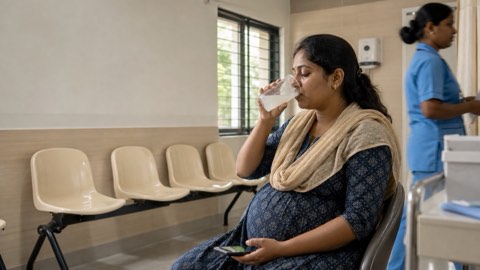
Keep drinking water where the fast allows it. Dehydration is the main mechanism behind almost every fasting complication in pregnancy.
Eat properly at the pre-fast and post-fast meals — protein, complex carbohydrates and fluid rather than fried food and sweets, which spike and crash. Take your iron, calcium and folic acid as scheduled; do not skip a day of supplements for the fast.
Rest, stay out of the heat and the kitchen's heat, and avoid standing for long pujas.

Breastfeeding and fasting
Milk supply is fairly resilient to a short fast, and it is not resilient to dehydration. The commonest effect is a temporary dip in supply and a very tired mother.
If you fast, drink heavily in the hours you can, feed as often as usual, and expect to need more rest. Watch the baby's nappies — fewer wet nappies than usual means supply has dropped and the fast needs breaking or modifying.
In the first few weeks after delivery, while feeding is being established, fasting is a bad idea in any tradition. Wait until supply is settled.
When to see a doctor
Break the fast immediately and seek care for: dizziness or fainting, a racing heart, severe headache, vomiting, contractions or belly tightening, reduced fetal movements, dark and scanty urine, confusion, or visual disturbance.
Same-day at any point: bleeding, leaking fluid, severe abdominal pain, or reduced fetal movements. For a mother with diabetes, any symptoms of low blood sugar — shaking, sweating, confusion — mean eating immediately and calling the doctor.
This article is general information, not medical advice, and is no substitute for personal medical advice. For any decision about your or your child's health, please consult your doctor.
Frequently asked questions
My mother-in-law says the fast is important for the baby's wellbeing.
Every relevant tradition exempts pregnant women, and this is worth saying plainly and once. If it is easier, ask your obstetrician to write the advice down; a doctor's note ends most of these conversations.
Can I keep Karwa Chauth without water?
Ask your doctor for your specific case. Many women do it in an uncomplicated pregnancy in cooler weather; a waterless day-long fast in the third trimester, in heat, or with any complication is where the risk sits.
Is a fruit-and-milk fast safe?
Generally much safer than a waterless fast, and often the version families settle on. Keep the fluid up and take the supplements.
I fasted and now feel unwell.
Break it, drink, eat something, and rest. If symptoms persist or include any of the warning signs above, get checked the same day. Ending a fast for health reasons is permitted in every tradition that requires it.
Sources
Every clinical figure on this page is taken from the guidelines below. Where our numbers and your doctor's differ, ask which guideline they follow.
- ACOG. Nutrition During Pregnancy (FAQ) (2023)Supports the page's guidance that pregnant women with gestational diabetes, hypertension, anaemia, twin pregnancies, or a history of preterm labour face heightened risk from fasting and should consult their obstetrician.
- NICE. Diabetes in pregnancy: management from preconception to the postnatal period (NG3) (2023)Supports the page's warning that fasting can be genuinely dangerous for women with diabetes or gestational diabetes, including the hypoglycaemia symptoms (shaking, sweating, confusion) listed as requiring immediate action.
- UNICEF. Breastfeeding: A mother's gift, for every child (2018)Supports the page's advice that milk supply is resilient to short fasts but vulnerable to dehydration, that frequent feeding should be maintained during a fast, and that fewer wet nappies indicate inadequate supply.
Reviewed by
- Nakul Phatak — CEO, theAsianparent India & IndonesiaHead of theAsianparent India; father of one
- Roshni Chugani — Head of Marketing, theAsianparent India & Singapore12 years in the mother-and-baby space; mother of two
Published by: theAsianparent editorial team