Maternity schemes in India: the cash benefits you are entitled to

There is real money available for pregnancy and delivery in India, and a great deal of it goes unclaimed because nobody explains the paperwork.
The main schemes
Pradhan Mantri Matru Vandana Yojana (PMMVY): a maternity benefit paid in instalments for the first living child, on conditions such as early registration of the pregnancy, antenatal check-ups and the child's birth registration and first vaccinations. The scheme has been extended to a second child where that child is a girl.
Janani Suraksha Yojana (JSY): cash assistance for institutional delivery, with amounts varying by state and by whether you are in a rural or urban area, aimed particularly at women from lower-income households. The ASHA worker facilitates it and also receives an incentive for accompanying you.
Janani Shishu Suraksha Karyakram (JSSK): not cash but free services at public facilities — free delivery including caesarean, free medicines, diagnostics, diet, blood and transport, for pregnant women and for sick newborns.
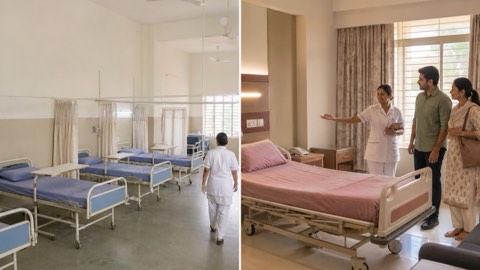
Ayushman Bharat (PM-JAY): hospitalisation cover for eligible families up to a substantial annual limit at empanelled public and private hospitals. Check eligibility and the empanelled list before delivery, not at the billing counter.
Employed women are separately entitled under the Maternity Benefit Act to 26 weeks of paid leave for the first two children, and establishments with 50 or more employees must provide crèche facilities.
The paperwork that decides whether you get paid
Register the pregnancy early at the Anganwadi or health centre and get the MCP card. Almost every benefit hangs off that registration and the check-ups recorded on it.
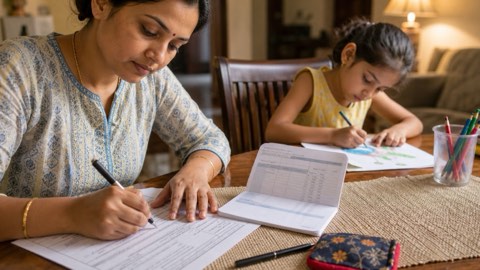
Keep: the MCP card, Aadhaar for mother and husband, a bank account in the mother's own name linked to Aadhaar, the birth certificate, and the vaccination record. The bank account in her name is the single item that most often causes delays.
Attend the antenatal check-ups and record them — several instalments are conditional on them, and the free specialist camp on the 9th of each month under PMSMA counts.
Register the birth within 21 days, and complete the first vaccinations on schedule. Later instalments depend on both.
Ask the ASHA worker or the Anganwadi worker directly — they are the people who process this daily, they know the current forms, and they are the fastest route past a stuck application.
State schemes, and what to watch for
Several states run their own additional schemes for pregnant women and girl children, with different names, amounts and conditions. Ask at the Anganwadi what your state currently offers — this changes more often than the national schemes do.
Amounts and rules for all of these are revised from time to time. Treat any figure you read online, including in older articles, as needing confirmation at the health centre.
Two cautions: nobody should charge you a fee to process a government benefit, and no scheme requires you to pay an agent. And under the PCPNDT Act, no scheme or clinic may condition anything on the sex of the baby — any such suggestion is a criminal offence.
Frequently asked questions
I delivered in a private hospital. Can I still claim?
JSY is tied to delivery at a government or accredited facility. PMMVY is a maternity benefit with its own conditions rather than a delivery-location one — ask at the Anganwadi. Ayushman Bharat can be used at empanelled private hospitals if your family is eligible.
The bank account is in my husband's name.
The benefit is meant to be credited to the mother's own Aadhaar-linked account. Opening one is worth doing regardless; a woman with her own account is in a materially stronger position.
Do these schemes apply to a second or third child?
PMMVY covers the first child and, in its extended form, a second child if that child is a girl. JSY conditions vary by state and category. Ask locally rather than assuming.
How long does the money take?
Weeks to months, and delays are common. Keep photocopies of everything you submit, note the application number, and follow up through the Anganwadi worker rather than waiting silently.
Sources
Every clinical figure on this page is taken from the guidelines below. Where our numbers and your doctor's differ, ask which guideline they follow.
- MoHFW. Pradhan Mantri Matru Vandana Yojana (PMMVY) – Scheme Guidelines (2017)Backs the description of PMMVY as a maternity benefit paid in instalments for the first living child conditional on pregnancy registration, antenatal check-ups, birth registration and first vaccinations, and its extension to a second child where that child is a girl.
- MoHFW. Janani Suraksha Yojana (JSY) – Guidelines for Implementation (2005)Backs the description of JSY as cash assistance for institutional delivery varying by state and rural/urban classification, targeting lower-income women, with the ASHA worker facilitating the benefit and receiving an incentive for accompanying the beneficiary.
- MoHFW. Janani Shishu Suraksha Karyakram (JSSK) – Operational Guidelines (2011)Backs the claim that JSSK provides free delivery (including caesarean), free medicines, diagnostics, diet, blood and transport at public facilities for pregnant women and sick newborns.
- MoHFW. Ayushman Bharat Pradhan Mantri Jan Arogya Yojana (PM-JAY) – Scheme Overview (2018)Backs the description of PM-JAY as a hospitalisation cover for eligible families at empanelled public and private hospitals, and the advice to check eligibility and the empanelled hospital list before delivery.
- MoHFW. Pradhan Mantri Surakshit Matritva Abhiyan (PMSMA) – Guidelines (2016)Backs the claim that a free specialist antenatal camp is held on the 9th of each month under PMSMA and that attendance counts toward conditions recorded on the MCP card.
- MoHFW. Mother and Child Protection (MCP) Card – National Guidelines (2018)Backs the instruction to register the pregnancy early at the Anganwadi or health centre and obtain the MCP card, and the statement that most maternity benefits are conditional on registration and the check-ups recorded on it.
Reviewed by
- Nakul Phatak — CEO, theAsianparent India & IndonesiaHead of theAsianparent India; father of one
- Roshni Chugani — Head of Marketing, theAsianparent India & Singapore12 years in the mother-and-baby space; mother of two
Published by: theAsianparent editorial team