Pregnancy week 10: the fragile chapter closes

Science renames the baby this week — 'embryo' becomes 'fetus' — and the change of word marks the close of the most fragile chapter. Next week, the NT scan window opens.
The week the name changes
In the textbooks the baby's name changes this week — embryo to fetus. It isn't just vocabulary: it means the riskiest organ-building phase is complete.
With it changes a number too rarely said aloud — the miscarriage risk that was highest in the early weeks falls steeply once a heartbeat is seen and week ten arrives.
The 'don't tell before three months' custom is rooted in exactly that number. The threshold is near — this is the right week to plan who hears the news, when and how.
Your baby this week
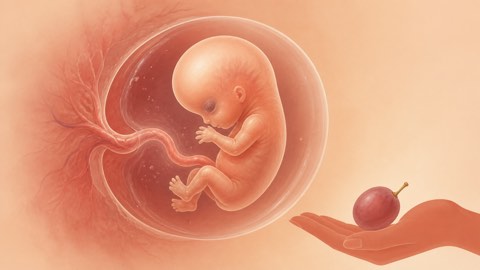
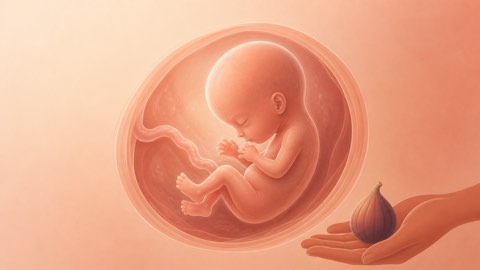
The fetus is amla-sized — about three centimetres, four grams. The tail is fully gone; the body is straightening.
Nails are growing, soft bones are hardening, and tooth buds are seating themselves in the gums — the tooth that shows at six months old is founded today.
The abdominal organs are at their stations — the intestines, which had been developing partly in the umbilical cord for want of room, are returning into the belly. The kidneys have started making urine.
Read next
Changes in your body
Your blood volume is genuinely rising — by pregnancy's end it grows by nearly half. The heart runs a little faster and some women feel warmer. That is the work the tiredness pays for.
Bleeding gums at brushing are a common complaint of these weeks — increased blood flow. The cure isn't skipping brushing; it's a soft brush and gentleness.
Occasional pulls low in the belly — on turning, sneezing or standing quickly — are the round ligaments stretching. Momentary and one-sided is normal; persistent and worsening is not.
What to do this week
If the NT scan is booked, arrange the double-marker blood test for the same day — the two are read together.
Start thinking about when to tell the workplace — especially if the job involves fumes, chemicals, heavy lifting, long standing or nights. The Maternity Benefit Act gives 26 weeks' paid leave in the organised sector — and honesty requires saying: informal work doesn't get that protection; there the planning is the family's own.
In flu season, ask about the flu vaccine — considered safe in pregnancy, and flu itself is harder on pregnant women.
Weigh yourself once before the next visit. Total pregnancy gain depends on the starting build — commonly 10-12 kilos — and most of it comes in the second and third trimesters. Gaining nothing in the first, or losing to nausea, is normal.
Week 10 at a glance
The week's essentials in one place. Your doctor may adjust these for your situation.
| Item | In week 10 |
|---|---|
| Main event | Embryo → fetus; the fragile chapter closes |
| Baby's size | Amla — about 3 cm, 4 g |
| Forming | Nails, hardening bones, tooth buds |
| Possible symptoms | Feeling warm, bleeding gums, ligament pulls |
| At hand | NT scan + double marker — 11 to 13+6 |
| To think about | When to tell the office; leave planning |
| Keep going | Folic acid, iron, the daily walk |
When to see a doctor at once
A momentary one-sided pull is normal — but pain that persists, worsens, or arrives with bleeding goes to the doctor the same day.
Fever above 100.4°F in pregnancy is a reason to be seen in itself — 'it's just viral' patience doesn't apply here. And the urinary trio — burning, frequency, fever — same-day, as ever.
This article is general information only and no substitute for personal medical advice. The person who can advise you knowing your health, your medicines and your previous pregnancies is your obstetrician, or the doctor at your nearest health centre.
Work out your due date
Enter the first day of your last period and your cycle length — your estimated due date, this week's count and the anomaly scan window all appear right here.
It is only an estimate — most babies aren't born on the exact date. A first-trimester scan dates a pregnancy more accurately; in the end, your doctor's date is the one that counts.
Frequently asked questions
How much has the miscarriage risk actually dropped?
Once a heartbeat has been seen and week ten is reached, it falls to a few percent, and keeps falling. That's why the world shares its news around week twelve.
When will the bump show?
First pregnancies usually week sixteen-twenty; sooner in later ones. No bump at ten weeks is completely normal — the uterus is still behind the pubic bone.
Is travel okay
train or flight? — In a normal pregnancy, yes; the second trimester is the most comfortable window but these weeks aren't barred. On long journeys, walk hourly and keep drinking water. High-risk pregnancies ask the doctor first.
Mehndi and hair colour?
Mehndi is safe. For chemical dye the evidence is thin either way — most doctors say after the first trimester, in a ventilated room, minimal skin contact.
Sources
Every clinical figure on this page is taken from the guidelines below. Where our numbers and your doctor's differ, ask which guideline they follow.
- WHO. WHO recommendations on antenatal care for a positive pregnancy experience (2016)Backs the claim that influenza vaccine is considered safe in pregnancy and that flu poses greater risk to pregnant women, as WHO recommends inactivated influenza vaccination for pregnant women as part of routine antenatal care.
- ACOG. Weight Gain During Pregnancy (Committee Opinion 548) (2013)Backs the claim that total pregnancy weight gain depends on pre-pregnancy build and that minimal or no gain in the first trimester due to nausea is normal.
- ACOG. Influenza Vaccination During Pregnancy (Committee Opinion 732) (2018)Backs the page's advice to ask about the flu vaccine in flu season, supporting both its safety in pregnancy and the increased severity of influenza illness in pregnant women.
- NICE. Antenatal care (NG201) (2021)Backs the claim that fever above 100.4°F in pregnancy warrants same-day medical assessment, and supports guidance on first-trimester nuchal translucency (NT) scan combined with blood markers for chromosomal screening.
- ADA. Pregnancy and Oral Health (2023)Backs the claim that bleeding gums during pregnancy are caused by increased blood flow and that the correct response is continued brushing with a soft-bristled toothbrush rather than stopping brushing.
- MoHFW. Pradhan Mantri Surakshit Matritva Abhiyan – Antenatal Care Protocols (2016)Backs the recommendation for combined first-trimester screening (NT scan plus double-marker blood test) as part of structured antenatal care, consistent with India's national maternal health guidance.
Reviewed by
- Nakul Phatak — CEO, theAsianparent India & IndonesiaHead of theAsianparent India; father of one
- Roshni Chugani — Head of Marketing, theAsianparent India & Singapore12 years in the mother-and-baby space; mother of two
Published by: theAsianparent editorial team