Your toddler at 19 months: climbing everything and copying everyone

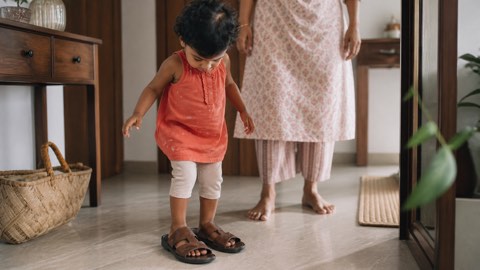
Nineteen months is the age of imitation. Whatever the adults in the house do, the toddler is now doing — which is useful and occasionally embarrassing.
Where a 19-month-old is
Climbing is the dominant skill: onto chairs, tables, windowsills and out of cots. Balcony grilles, furniture placement and window latches all need rechecking this month.
Language often accelerates — twenty to fifty words for many, with two-word phrases appearing. Others are still slower and, provided the eighteen-month markers were met, that remains fine.
Imitation drives everything: sweeping, wiping, cooking, phone calls, and the exact words and tone adults use. This is the month most families first hear their own phrases come back at them.
Using imitation
Give them real jobs: wiping a spill, carrying their plate to the sink, putting toys in a box, watering a plant. Toddlers take responsibility seriously and it builds competence far faster than toys do.
Model what you want to see — please, thank you, gentle hands, taking turns. Instruction works far less well than demonstration at this age.
And notice what else is being copied: shouting, hitting, phone use at meals. A household that hits has a toddler who hits; a household on phones at dinner has a toddler who wants one.

Sleep, food and safety
One nap after lunch, total sleep 11-14 hours. Bedtime resistance is common now and responds to consistency rather than negotiation.
Food: family meals chopped small, milk capped, snacks structured. Expect refusals and keep serving without comment.
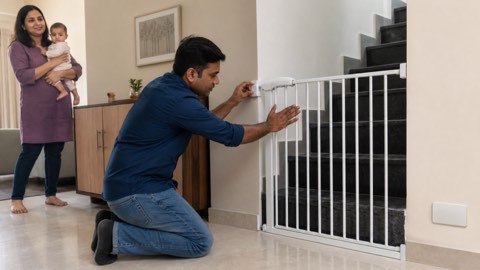
Safety this month: secure any furniture that can topple, keep chairs away from balconies and windows, lock away medicines and cleaning products, and keep buckets emptied. A nineteen-month-old can reach anything they can climb to.
When to see a doctor
Same-day at any age: fast or laboured breathing, the chest sucking in, blue lips; a fit; a child who is floppy, drowsy or hard to wake; no urine for six to eight hours or signs of dehydration; a rash that does not fade when pressed; repeated forceful or green vomiting; blood in stool or vomit; a swollen tender abdomen; or a head injury with vomiting or drowsiness. Call 108 for breathing difficulty.
At 19 months specifically: no words, no pointing or gestures, not following simple instructions, no pretend play, not responding to their name, or losing skills.
And at any age, the loss of a skill a child already had — words, walking, waving, eye contact — needs an assessment rather than a wait.
This article is general information, not medical advice, and is no substitute for personal medical advice. For any decision about your or your child's health, please consult your doctor.
Frequently asked questions
He repeats everything we say, including the bad words.
Textbook nineteen months. React as little as possible to the word you do not want repeated, since a big reaction guarantees repetition, and adjust the household's language.
She climbs out of the cot at night.
Move to a floor mattress and make the room itself safe, because she will be out either way. A gate at the door is safer than a locked one.
Is a screen okay for twenty minutes?
Guidance is very limited screen time and co-viewing before two. If it is used, keep it short, gentle and never at meals.
How do I get him to sit for meals?
A fixed seat, the whole family sitting, the meal ending when he gets down, and no chasing. Meals are twenty minutes at this age, not forty.
Sources
Every clinical figure on this page is taken from the guidelines below. Where our numbers and your doctor's differ, ask which guideline they follow.
- WHO. WHO guidelines on physical activity, sedentary behaviour and sleep for children under 5 years of age (2019)Supports the recommendation of very limited screen time and co-viewing before age two, and the total sleep duration guidance of 11–14 hours for toddlers.
- NICE. Fever in under 5s: assessment and initial management (NG143) (2021)Supports the same-day emergency warning signs listed on the page, including fast or laboured breathing, chest retractions, a rash not fading under pressure, floppiness or difficulty waking, and signs of dehydration.
- MoHFW. Child Health — Integrated Management of Neonatal and Childhood Illness (IMNCI) guidelines (2023)Supports the emergency danger signs listed for any age including fast or laboured breathing, chest in-drawing, inability to wake, no urine or dehydration signs, and green or forceful vomiting, as well as the advice to call emergency services for breathing difficulty.
Reviewed by
- Nakul Phatak — CEO, theAsianparent India & IndonesiaHead of theAsianparent India; father of one
- Roshni Chugani — Head of Marketing, theAsianparent India & Singapore12 years in the mother-and-baby space; mother of two
Published by: theAsianparent editorial team