Nappy rash and nappy choices: cloth, disposable, and keeping the skin clear

Nearly every baby gets nappy rash at some point, and nearly all of it clears with the same four steps. Here they are — plus an honest look at cloth versus disposable in an Indian climate.
Why it happens and how to clear it
Nappy rash is skin damaged by wetness, friction and the ammonia in urine mixing with stool. Nothing about it means neglect — it happens in the best-run houses, especially during diarrhoea, teething, antibiotics and hot weather.
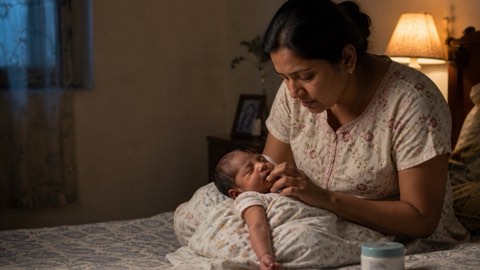
The four steps that clear most rashes in two to three days: change more often (every two to three hours and immediately after a stool); clean gently with plain water and a soft cloth rather than scented wipes; dry completely, patting not rubbing; and apply a thick barrier — zinc oxide cream or plain petroleum jelly — like icing a cake, not like a moisturiser.
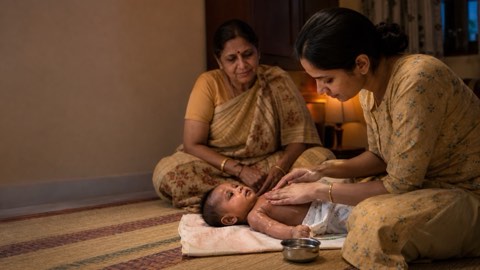
Then add the fifth step everyone skips: nappy-free time. Twenty minutes twice a day on a towel, bare bottom to the air, does more than any cream. In warm Indian weather this is easy and it is the fastest healer there is.
The rash that needs a doctor
A fungal (candida) rash looks different: bright beefy red, sharply outlined, deep in the skin folds rather than sparing them, often with small satellite spots around the edge. It needs an antifungal cream on prescription — barrier cream alone will not shift it, and powder makes it worse.
Also show the doctor: any rash with blisters, pus, open sores or bleeding; a rash that has not improved after three days of good care; a rash with fever; or a rash that keeps recurring. Recurrent rashes sometimes point at thrush in the mouth too — check for white patches on the tongue and inner cheeks that do not wipe off.
Never apply steroid creams or antibiotic ointments to a baby's nappy area without a prescription, and never a combination cream from the last person's leftover tube. Nappy skin absorbs far more than you expect.
Cloth, disposable, or both
Cloth (langot, nappy squares, modern pocket nappies): cheap over the long run, no landfill, breathable in heat, and no chemical worry. The cost is labour and water — and the critical rule that cloth must be changed the moment it is wet, because a wet cloth against skin for an hour is exactly how rash starts.
Disposable: dry against the skin, convenient for nights and outings, no washing. The cost is money, waste, and the temptation to leave it on too long because it does not feel wet. Whatever the label says about twelve hours, small babies get changed every two to three.
Most Indian families end up doing what works: cloth by day at home, disposable at night and when out. That is a sensible answer, not a compromise. Whichever you use, the rash-prevention rules are identical — change often, clean gently, dry fully, barrier cream at the first hint of redness.
For cloth, the laundry matters: rinse the stool off first, wash in hot water with a mild detergent, rinse twice so no detergent remains, and dry in direct sun — sunlight is a free disinfectant and a stain remover. Skip fabric softener; it reduces absorbency and irritates skin.
Frequently asked questions
Is powder useful in the nappy area?
No. It cakes with moisture, adds friction, worsens fungal rashes and can be inhaled. Dry skin properly and use a barrier cream instead.
Are wet wipes safe for newborns?
Plain water and a soft cotton cloth are the gentlest choice for the first weeks and during a rash. If you use wipes, choose fragrance- and alcohol-free ones, and stop them entirely while a rash is healing.
My mother-in-law says nappies cause bow legs or infertility
any truth? — None. Bow legs in babies are normal development and straighten by themselves; the infertility claim has no basis. The real nappy risks are rash and overheating, both fixed by frequent changes.
When do children stop needing nappies?
Most manage daytime toilet training somewhere between two and three years, and night dryness later — sometimes much later, and that is normal. Our toilet training guide has the readiness signs; the one thing that does not work is starting before the child is ready.
Sources
Every clinical figure on this page is taken from the guidelines below. Where our numbers and your doctor's differ, ask which guideline they follow.
- AAP. Diaper Rash (HealthyChildren.org) (2022)Backs the recommendation to change nappies frequently (every two to three hours), to use fragrance-free and alcohol-free wipes or plain water, to apply a thick layer of zinc oxide or petroleum jelly as a barrier, and the caution against talcum powder in the nappy area due to inhalation risk and worsening of rashes.
- AAP. Toilet Training: Helping Your Child – HealthyChildren.org (2021)Backs the page's statement that most children achieve daytime toilet training between two and three years of age and that starting before the child shows readiness signs is counterproductive.
- WHO. Recommendations on newborn health: guidelines approved by the WHO Guidelines Review Committee (2017)Backs the preference for plain warm water and a soft cloth over scented or chemical wipes for cleaning a newborn's skin, consistent with WHO guidance on gentle newborn skin care in the early weeks.
Reviewed by
- Nakul Phatak — CEO, theAsianparent India & IndonesiaHead of theAsianparent India; father of one
- Roshni Chugani — Head of Marketing, theAsianparent India & Singapore12 years in the mother-and-baby space; mother of two
Published by: theAsianparent editorial team