Ear piercing for babies: the right age, the safe way, and aftercare

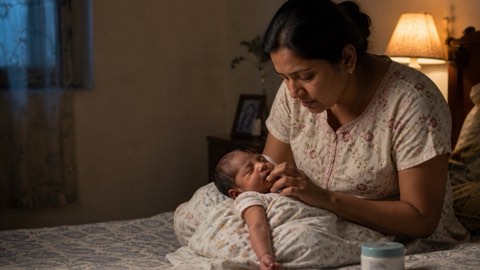
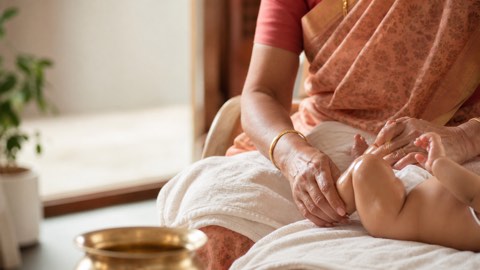
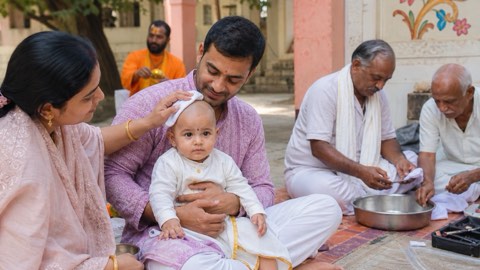
Karnavedha is done in most Indian families, often in the first year. The tradition is fine; the hygiene is where it goes wrong.
When
Traditionally in the first year, often between six and twelve months, and in some communities in the third or fifth year. In several families boys' ears are pierced too.
Medically, waiting until the baby has had the tetanus-containing vaccines of the primary schedule — the six, ten and fourteen-week doses — is sensible, which points to somewhere after four months at the earliest.
Later has practical advantages: an older baby is less likely to pull at the ears, and the earlobe is bigger to work with. Waiting until a child can choose is also a legitimate position.
Doing it safely
The essentials: sterile single-use needle or a sterile disposable cartridge, gloves, a clean surface, and hands washed in front of you. A goldsmith's reused needle is exactly how infection and blood-borne viruses spread.
Piercing guns are common and are a poorer choice for babies — they cannot be fully sterilised between uses in the way a single-use needle can, and they cause more tissue trauma. If a gun is used, it must have a fully disposable sterile cartridge.
Studs should be medical-grade — surgical steel, titanium or 22-carat gold — with a smooth, flat-backed design. Nickel is a common allergen, and dangling earrings on a baby are a strangulation and choking risk.
The safest place is a paediatrician's clinic or a hospital that offers it. Many now do, with an anaesthetic cream applied beforehand, which is worth asking about.
Aftercare
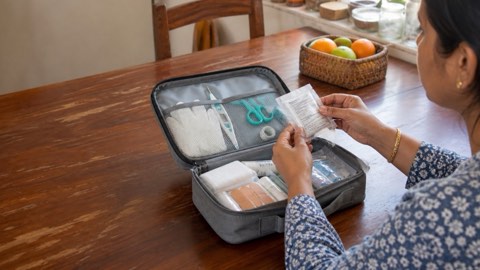
Clean around the piercing twice a day with saline or the solution recommended, with clean hands. Do not use alcohol or hydrogen peroxide, which delay healing.
Rotate the stud only if you are told to — current advice often says to leave it alone — and keep the first studs in for around six weeks while the channel forms.
Keep hair, dupattas and clothing away from the ear, and dry the ears carefully after bathing. Tie long hair back for the first weeks.
Some redness and slight tenderness in the first days is normal. Swelling, warmth, pus, spreading redness or fever is not.
When to see a doctor
Same-day: pus or discharge, spreading redness or warmth around the ear, swelling of the earlobe, fever, a stud that has become embedded in the skin, or the baby crying persistently and pulling at the ear.
Also see a doctor for: a lump forming at the site over weeks (a keloid, which is commoner in some families and easier to treat early), or a rash suggesting a metal allergy.
This article is general information, not medical advice, and is no substitute for personal medical advice. For any decision about your or your child's health, please consult your doctor.
Frequently asked questions
Is it more painful for a baby than an older child?
It hurts briefly at any age. Babies settle faster and remember nothing; older children anticipate it and can be prepared. Neither is cruel when done hygienically with proper aftercare.
Is there any health benefit to ear piercing?
The acupressure claims are traditional rather than evidence-based. Do it as a family custom, which is reason enough, rather than for a health benefit.
Can we get it done at a jewellery shop?
Only if they use a sterile single-use needle or cartridge, gloves and clean hands. Most infections come from exactly this setting.
What if one hole is uneven?
Common, and correctable later: let it heal fully, then have it redone by a professional. Do not adjust a fresh piercing yourself.
Sources
Every clinical figure on this page is taken from the guidelines below. Where our numbers and your doctor's differ, ask which guideline they follow.
- WHO. WHO guidelines on hand hygiene in health care (2009)Supports the instruction that hands must be washed before the procedure and that gloves and a clean surface are essential to prevent infection and blood-borne virus transmission.
- NICE. Healthcare-associated infections: prevention and control in primary and community care (CG139) (2012)Supports the general infection-prevention principles cited on the page — sterile single-use equipment, gloves, and hand hygiene — as the basis for recommending a clinical setting (paediatrician's clinic or hospital) as the safest place for the procedure.
Reviewed by
- Nakul Phatak — CEO, theAsianparent India & IndonesiaHead of theAsianparent India; father of one
- Roshni Chugani — Head of Marketing, theAsianparent India & Singapore12 years in the mother-and-baby space; mother of two
Published by: theAsianparent editorial team