Conjunctivitis, styes and watery eyes: children's eye problems explained

Red eyes go round Indian schools every year. Most of it is viral and self-limiting — and a few eye problems in childhood are genuinely time-sensitive.
Conjunctivitis
Viral: watery discharge, redness, often both eyes, frequently with a cold. Extremely infectious, lasts a week or so, and needs comfort measures rather than antibiotics.
Bacterial: thicker yellow or green discharge, lids stuck together in the morning. Often treated with antibiotic drops, particularly in younger children.
Allergic: itching is the dominant symptom, with watering and puffy lids, often seasonal and with sneezing. Treated with antihistamines or prescribed drops, not antibiotics.
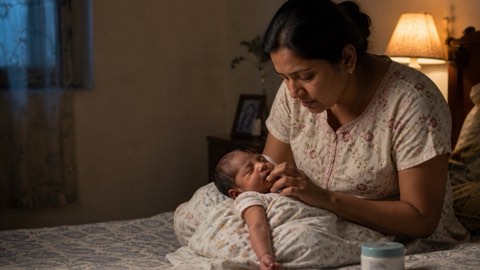
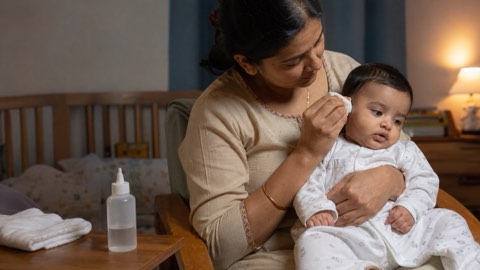
Care at home: wipe the discharge with clean cotton and cooled boiled water, from the inner corner outward, a fresh swab each time and each eye. Separate towels, frequent handwashing, and keep the child home while the eye is sticky — this is how an entire class gets it.
Do not use: breastmilk, kajal, rosewater, home eye drops, or someone else's leftover drops. Steroid eye drops in particular must never be used without an eye doctor, because they can cause serious damage if the wrong condition is treated.
Styes, blocked tear ducts and watery eyes
A stye is a small painful lump at the lid margin. Warm compresses several times a day for a few days usually settle it. Do not squeeze it. See a doctor if it is large, if the whole lid swells, or if it keeps recurring.
In babies, a persistently watery, gunky eye is usually a blocked tear duct — the drainage channel has not opened. Most clear by the first birthday. Clean the discharge, and ask your doctor to show you the gentle massage over the inner corner. Redness and swelling of the surrounding skin, though, means infection and needs same-day care.
Older children with constantly watering, itchy eyes in a particular season are usually allergic, and that is worth treating properly because rubbing damages the eye surface over time.
Read next
Squint, lazy eye and vision
Intermittent crossing of the eyes in the first three to four months is normal while eye muscles coordinate. Constant crossing at any age, or any drifting after four months, needs an eye specialist rather than reassurance.
This is time-sensitive. Untreated squint leads to amblyopia — lazy eye — where the brain suppresses the weaker eye, and treatment works far better the younger it is started. Patching, glasses and sometimes surgery are the treatments, and outcomes drop sharply after the early years.
Watch for: a head tilt to see, sitting very close to the television, holding books close, squinting or closing one eye, clumsiness, poor school performance, or a white reflection instead of red-eye in photographs, which needs urgent assessment.
A vision check before starting school is worth doing even with no symptoms, because a child with one weak eye has no way of knowing anything is unusual.
When to see a doctor
Emergency, same hour: any injury to the eye, chemical or colour splashed into the eye (rinse with clean water for 15 minutes on the way), sudden loss of vision, severe eye pain, a white or cloudy pupil, or an eye that is bulging.
Same-day: eye redness with pain, light sensitivity or blurred vision; swelling and redness of the eyelid or around the eye, which can be a spreading infection; any eye problem in a baby under one month; a stye with lid swelling and fever; or thick discharge in a newborn.
This article is general information, not medical advice, and is no substitute for personal medical advice. For any decision about your or your child's health, please consult your doctor.
Frequently asked questions
How long is conjunctivitis contagious?
Viral conjunctivitis usually while the eye is red and watering, often a week. Bacterial, until about 24 hours after starting antibiotic drops. Keep the child home while the eye is discharging.
Do screens ruin children's eyes?
Screens cause eye strain and dryness rather than permanent damage, but time spent indoors is associated with more short-sightedness. Outdoor play in daylight genuinely reduces the risk of myopia — that is one of the more robust findings in child eye health.
Is kajal safe in a baby's eyes?
No. It is a common cause of irritation and infection, and lead has been found in several traditional preparations. A mark behind the ear serves the same cultural purpose.
When should a child's first eye test be?
By around three to four years, and immediately at any age if there are signs of a squint, a head tilt, or a family history of childhood eye problems.
Sources
Every clinical figure on this page is taken from the guidelines below. Where our numbers and your doctor's differ, ask which guideline they follow.
- NHS. Conjunctivitis (2023)Backs the descriptions of viral, bacterial, and allergic conjunctivitis (symptoms, discharge type, treatment approach), the advice to wipe discharge from inner corner outward with cooled boiled water, and the guidance to avoid steroid eye drops without a doctor.
- NHS. Stye (2023)Backs the advice that warm compresses several times a day usually settle a stye, that squeezing should be avoided, and the red-flag criteria for seeking medical review (large stye, whole lid swelling, or recurrence).
- NICE. Squint (strabismus) — recognition and referral (NICE guideline NG181) (2021)Backs the claims that intermittent crossing in the first three to four months is normal, that constant or drifting eyes after four months require an eye specialist, that untreated squint leads to amblyopia, and that outcomes are better when treatment is started early.
- WHO. World report on vision (2019)Backs the statement that time spent outdoors in daylight is associated with reduced risk of myopia development in children.
Reviewed by
- Nakul Phatak — CEO, theAsianparent India & IndonesiaHead of theAsianparent India; father of one
- Roshni Chugani — Head of Marketing, theAsianparent India & Singapore12 years in the mother-and-baby space; mother of two
Published by: theAsianparent editorial team