The complete newborn essentials checklist for India

New parents in India are sold a very long list. This is the shorter one that covers everything a newborn actually needs.
Clothing and cloth
Six to eight cotton jhablas or side-tie tops, in the next size up rather than newborn size, which is outgrown in weeks.
Six to eight bodysuits or sleepsuits with front openings — anything that goes over the head is a struggle in the first weeks.
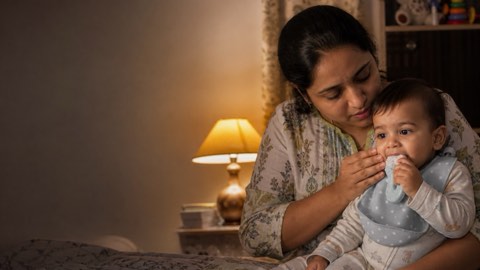
Two dozen soft muslin or cotton nappy cloths, which serve as nappies, burp cloths, wipes and shade.
Four to six swaddle cloths, six pairs of socks and mittens, two caps, and two hooded towels.
Season matters: for a winter baby add two warm layers and a blanket; for a summer baby buy fewer layers and more muslin. Wash everything before use, with a mild detergent and no fabric softener.
Sleeping, feeding and changing
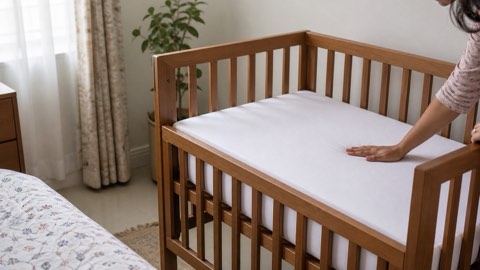
Sleep: a firm flat surface — cot, cradle or the bed if you are room-sharing safely — with a firm mattress and a fitted sheet. No pillows, bumpers, quilts or soft toys in the sleep space. Buy three or four fitted sheets and a few waterproof sheets.
Feeding, if breastfeeding: two or three nursing bras, breast pads, a feeding pillow if you want one, and nipple cream. A pump only if you know you will need it.
Feeding, if bottle feeding or mixed: four to six bottles with slow-flow teats, a bottle brush, and a sterilising method. Buy formula only on medical advice, and never buy a bottle before you know you need it.
Changing: nappies in newborn size — one pack only, because babies grow fast and some react to particular brands — cotton wool and water rather than wipes for the first weeks, a barrier cream, and a changing mat or simply a folded towel.
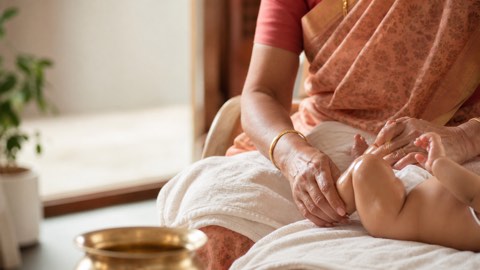
Bathing: a plastic tub, a mild cleanser, and a soft towel. Sponge-bathe until the cord stump falls off.
Health, travel and what to skip
Health: a digital thermometer, nail scissors or a file, cotton wool, saline nasal drops, and any vitamin D drops your paediatrician prescribes. Keep the immunisation card somewhere fixed.
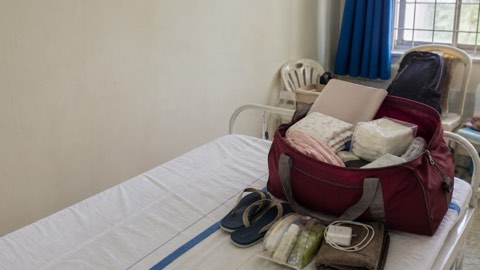
Travel: a car seat is the one item that is genuinely non-negotiable and is skipped by most Indian families. Buy it before the discharge journey. A pram or a carrier is useful; you do not need both at first.
Skip or delay: shoes, a large wardrobe of outfits, a cot mobile, bottle warmers, wipe warmers, a baby bath thermometer, a walker (unsafe, and banned in some countries), pillows for newborns, and elaborate bedding sets.
Also skip: kajal, oil in the ears or nostrils, and honey or gripe water before six months — all of these are traditional, and all of them carry real risk.
Borrow rather than buy: cot, pram, baby carrier, breast pump. Never buy a second-hand car seat, because you cannot know its crash history.
Frequently asked questions
How much will all this cost?
It varies hugely by choice of brand. Our baby cost calculator prices the first year using your own city's numbers rather than an averaged national figure.
Should I buy newborn-size clothes?
Buy very few. Most babies are out of newborn size within a few weeks, and Indian sizing runs small.
Cloth or disposable nappies?
Both work. Cloth is cheaper over a year and needs washing capacity; disposables are easier at night and while travelling. Many families use both.
When do I buy the car seat?
Before the birth, because the drive home is the first journey. It is the single most important purchase on this list.
Sources
Every clinical figure on this page is taken from the guidelines below. Where our numbers and your doctor's differ, ask which guideline they follow.
- AAP. Safe Sleep: Recommendations (2022)Recommends a firm, flat sleep surface with a fitted sheet and no pillows, bumpers, quilts, or soft toys in the infant sleep space.
- WHO. Breastfeeding (2023)Supports the page's instruction to purchase formula only on medical advice and to avoid introducing bottles before a clear need is established, consistent with WHO's promotion of exclusive breastfeeding.
- IAP. IAP Immunization Timetable 2024 (2024)Supports the instruction to keep the immunisation card in a fixed location, consistent with IAP's immunisation schedule guidance for Indian newborns.
- NIH. Honey and Infant Botulism (2023)Supports the warning against giving honey before six months, which carries real risk of infant botulism; also consistent with avoiding gripe water and kajal application in newborns.
Reviewed by
- Nakul Phatak — CEO, theAsianparent India & IndonesiaHead of theAsianparent India; father of one
- Roshni Chugani — Head of Marketing, theAsianparent India & Singapore12 years in the mother-and-baby space; mother of two
Published by: theAsianparent editorial team
Parents' Choice Awards 2026
Brands nominated and voted for by Indian parents.