Teething: the order teeth arrive, what helps the pain, and what teething does not cause

Twenty teeth arrive between roughly six months and three years, most of them without drama. Here is the timetable, the safe relief, and the important list of things teething gets blamed for but does not cause.
The timetable
The usual order: two bottom front teeth first (around 6-10 months), then the four top front (8-12 months), then the side incisors (9-16 months), first molars (13-19 months), canines (16-23 months), and second molars last (23-33 months). Twenty milk teeth by around three years.
The spread around those numbers is wide and mostly meaningless. A first tooth at four months and a first tooth at twelve months are both normal, and the timing tends to run in families — ask when you got yours. No teeth at all by 15-18 months is worth mentioning to the doctor, mostly to rule out the rare causes.
Some babies are born with a tooth, some get them in an unexpected order, some cut four at once. Our teething chart tool lets you tick them off as they arrive and see what is due next.
What teething actually feels like — and safe relief
Real teething signs are local and mild: sore swollen gums, heavy drooling, chewing on everything, a rash on the chin from drool, disturbed sleep for a few nights, and general crankiness around the days a tooth cuts through.
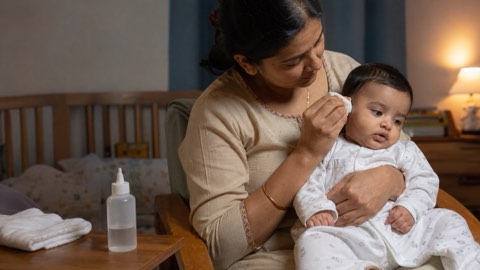
What helps: something firm and cold to chew — a chilled (not frozen) teething ring, a clean cold spoon, a cold washed cloth to gnaw. Firm counter-pressure with your clean finger on the gum. For older babies on solids, cold curd or chilled cucumber sticks under supervision. Wipe the chin often and use a barrier cream against drool rash.
Paracetamol at the weight-correct dose is reasonable for a genuinely miserable night, on your doctor's advice. That is the whole safe toolkit — and it is enough for almost every baby.


What to keep away
Teething gels containing local anaesthetics (benzocaine, lignocaine) and homeopathic 'teething tablets' are not recommended for babies — there have been genuine safety problems, and they treat a self-limiting discomfort. Skip them.
Amber necklaces and any bead or string around a baby's neck are a strangulation and choking risk with no proven benefit. Frozen-hard objects can bruise gums; hard rusks and biscuits are choking hazards for young babies and add sugar to gums at exactly the wrong time.
Also: no honey or gud rubbed on gums before one year (botulism risk and early sugar), no alcohol rubbed on gums — a genuinely dangerous old remedy — and no aspirin, ever, in children.
Caring for the teeth that arrive
Start cleaning from the first tooth: a soft baby brush or a clean cloth, twice a day. From around the first birthday use a rice-grain smear of fluoride toothpaste, moving to a pea-size blob at three. Brush for the child until they are around six or seven — small hands cannot do it properly, however keen they are.
The biggest cause of early childhood tooth decay in India is bottles and sipper cups of milk or juice at bedtime, and constant sugary snacking. Never put a baby to bed with a bottle; finish milk, then clean the gums or teeth, then sleep.
First dental visit around the first birthday or within six months of the first tooth. Milk teeth matter — they hold space for the adult set, and decay in them is painful and infectious, not a temporary problem that will fall out anyway.
When to see a doctor
Teething does NOT cause: high fever (38°C or more), diarrhoea, vomiting, rash on the body, cough, or a baby who is genuinely unwell. Every one of those needs to be assessed on its own merits — blaming a real illness on teeth is how infections get missed, and in a baby under three months any fever is a same-day hospital matter regardless of teeth.
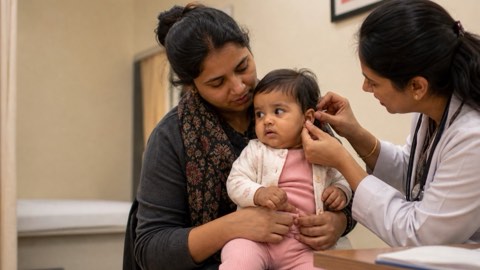
Also see a doctor for: swollen, bleeding or pus-filled gums; a tooth that comes in badly discoloured; no teeth at all by 15-18 months; or a baby refusing all feeds for more than a day.
This article is general information, not medical advice, and is no substitute for personal medical advice. For any decision about your or your child's health, please consult your doctor.
Frequently asked questions
My baby has a fever and is teething
surely the teeth explain it? — No. Teething may raise the temperature a fraction but does not cause true fever. Treat the fever by the fever rules; if the teeth happen to be cutting too, that is coincidence, and a common one at the age when maternal antibodies fade and infections rise.
A tooth came in crooked
will the adult teeth be crooked too? — Not necessarily; milk teeth often sit oddly and adult teeth are a separate deal. Gaps between milk teeth are actually a good sign — they leave room for the bigger permanent set. The dentist will say if anything needs watching.
Is chewing on everything a hygiene disaster?
It is unavoidable, so aim for clean rather than sterile: wash teethers daily, keep small objects and anything with loose parts, batteries or strings out of reach, and check the floor before floor-play. Choking risk matters more than germs.
Do teething babies eat less?
Often, for a few days around a tooth, and it needs no fixing beyond softer, cooler foods and continued milk. A baby who is eating markedly less for more than a few days is a different question — that is one for the doctor.
Sources
Every clinical figure on this page is taken from the guidelines below. Where our numbers and your doctor's differ, ask which guideline they follow.
- AAP. Teething: 4 to 7 Months (HealthyChildren.org)Backs the described order and approximate timing of primary tooth eruption, the characterisation of real teething signs (drooling, gum soreness, crankiness, disturbed sleep), and the recommendation that chilled (not frozen) teething rings and firm gum counter-pressure are appropriate comfort measures.
- WHO. Sugars and dental caries (WHO Technical Information Note)Backs the warning against bedtime bottles of milk or juice and constant sugary snacking as the main cause of early childhood tooth decay, and the general principle that sugar exposure drives caries in primary dentition.
- NHS. Teething (NHS.uk)Supports the statement that teething does not cause high fever, diarrhoea, vomiting, body rash or cough, and that these symptoms must be assessed independently; also supports guidance to avoid teething gels containing local anaesthetics such as benzocaine or lidocaine in babies.
Reviewed by
- Nakul Phatak — CEO, theAsianparent India & IndonesiaHead of theAsianparent India; father of one
- Roshni Chugani — Head of Marketing, theAsianparent India & Singapore12 years in the mother-and-baby space; mother of two
Published by: theAsianparent editorial team