Your child at 7: independence, fairness and their own opinions

Seven is when a child starts having views you did not give them — about fairness, about friends, and about you.
What changes this year
Thinking becomes more logical: understanding time, money, rules and cause and effect, and being able to hold an argument that follows from a premise — usually against you.
Reading moves from decoding to reading for meaning and pleasure, which is the moment the habit either forms or does not. Writing becomes longer and more organised.
Socially, friendship politics arrive: groups, exclusions, best friends who change weekly. A strong sense of fairness makes every slight feel enormous.
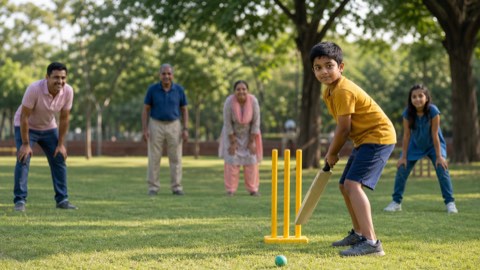
Physically: better coordination, real sport becomes possible, and permanent teeth continue to arrive — the orthodontic check belongs around now.
Independence and responsibility
Give real jobs: packing their own bag, remembering their own homework and PE kit, managing a small allowance, helping cook, and taking responsibility for a pet or a plant.
Let them experience small consequences — the forgotten book, the lost pencil — rather than rescuing every time. A rescued seven-year-old becomes a twelve-year-old who cannot organise anything.
Money: pocket money works well from around now, regular and modest, split into spend, save and give. Let them buy something bad and regret it; the lesson costs fifty rupees now and much more later.
Read next

School, screens and health
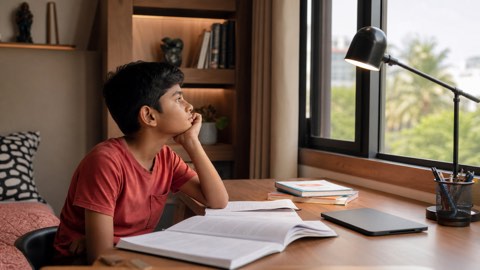
Homework should be around thirty to forty minutes. A fixed time and place, phone and television off, and an adult available but not hovering.
Screens: agree rules now — not in the bedroom, off an hour before bed, none at meals, and time limits by day. Start online-safety conversations: never share personal details, tell an adult if anything is frightening, and nothing sent digitally is private.
Health: annual growth check, haemoglobin, vision and hearing (headaches and eye-rubbing while reading are a vision check, not a personality trait), dental every six months, deworming twice yearly, and the first orthodontic assessment.
Sleep: 9-12 hours. Most Indian children of this age are short of it because bedtime is late, and it shows as irritability and poor concentration rather than as sleepiness.
When to see a doctor
Same-day at any age: difficulty breathing, a fit, a child who is drowsy or confused, severe abdominal pain, a head injury with vomiting or drowsiness, a rash that does not fade when pressed, or dehydration. Call 108 for breathing difficulty.
At seven to eight specifically: persistent difficulty reading, spelling or with number sense despite teaching, frequent headaches, inability to attend or sit compared with peers, daytime wetting or soiling, no friendships at all, or a marked change in mood, sleep or school performance.
And treat any talk of self-harm or not wanting to live as an emergency at any age: stay with the child, remove means of harm, and get help the same day. Tele-MANAS on 14416 is free and round the clock; Childline is 1098.
This article is general information, not medical advice, and is no substitute for personal medical advice. For any decision about your or your child's health, please consult your doctor.
Frequently asked questions
He argues about everything.
That is developing reasoning, and it is worth channelling rather than crushing. Let him make a case, hold the rules that matter, and concede when he is actually right — which teaches more than winning.
She has been left out by her friend group.
Listen first without fixing, coach one small step, and help build a friendship outside that group. Involve the teacher if it is repeated and deliberate — see our bullying guide.
Should he have a phone?
Not yet, in most cases. A basic phone for contact covers the safety argument; a smartphone at seven mostly creates problems you will spend years managing.
He reads only comics.
Comics are reading. Keep supplying them and leave other things nearby; children move on when ready.
Sources
Every clinical figure on this page is taken from the guidelines below. Where our numbers and your doctor's differ, ask which guideline they follow.
- WHO. WHO guidelines on physical activity, sedentary behaviour and sleep for children under 5 years of age / Global recommendations on physical activity for health (see also WHO sleep duration guidance for school-age children) (2019)Backs the recommended 9–12 hours of sleep per night for school-age children aged 6–12 years cited on this page.
- AAP. American Academy of Pediatrics: Media and Young Minds / Family Media Plan guidance (2016)Supports the screen-time rules recommended on this page: no screens in bedrooms, no screens one hour before bed, no devices at mealtimes, consistent daily time limits, and beginning online-safety conversations about personal information.
- MoHFW. National Deworming Day – Programme Guidelines (2023)Corroborates twice-yearly deworming for children of school age as part of the National Deworming Day schedule referenced implicitly in the health checklist.
Reviewed by
- Nakul Phatak — CEO, theAsianparent India & IndonesiaHead of theAsianparent India; father of one
- Roshni Chugani — Head of Marketing, theAsianparent India & Singapore12 years in the mother-and-baby space; mother of two
Published by: theAsianparent editorial team