Building a reading habit: how to raise a child who actually reads

Reading for pleasure predicts school success better than almost anything else parents control — and it is built by reading aloud, not by insisting.
Start with reading aloud, and never stop early
Read aloud daily from infancy — even to a baby who eats the book. It builds vocabulary, listening, attention and the association between books and comfort, all before a child can decode a single letter.
Keep reading aloud long after the child can read alone, into the double digits. Children can understand books years beyond their reading level, and shared reading is where the love of story survives the drudgery of learning to decode.
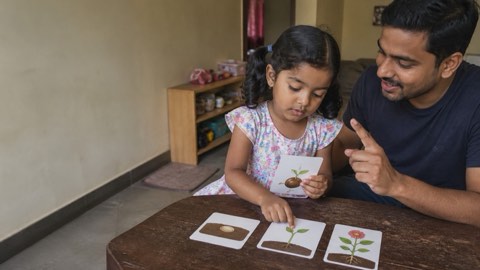
Let them choose, and let them re-read the same book fifty times — repetition is how young children learn language. Point at words as you read, use voices, stop and talk about the pictures, and let them turn the pages.
Choosing books that work
Match the book to the child, not the age label: short chapters, plenty of pictures, humour, and characters they recognise. Indian publishers now produce excellent children's books in English and regional languages — look for local settings and names, because children read more when they see themselves.
Comics, graphic novels, joke books, football annuals and Amar Chitra Katha all count as reading. The snobbery about 'proper books' kills more reading habits than screens do.
Read in the home language too. A child who reads Hindi, Tamil, Bengali or Marathi as well as English gains more, not less, and the home-language reading is often where the fluency comes from.
Keep books physically available and visible: a low shelf the child can reach, books in the bag, books by the bed. Availability is most of the battle.


The reluctant reader
Find out why before pushing. The usual causes: reading is still effortful (decoding takes all the capacity, leaving none for story), the books are too hard, there is no quiet time, or reading has become associated with tests and homework.
Lower the difficulty deliberately — easy books read fluently build confidence, and confidence builds reading. Audiobooks alongside the text help enormously, especially for children who find decoding hard.
Never use reading as punishment or make it a chore with a page target. Instead: fifteen minutes of family reading time where every person including the adults reads something, phones away. Modelling beats instruction.
If a child at eight or nine is still struggling badly with decoding, reads far below their speaking ability, or has persistent spelling difficulties, ask for a dyslexia assessment. Support works, and years of 'he's just lazy' does not.
Where to find books
Libraries: many cities have public libraries and children's libraries with small annual memberships, and school libraries are often underused — ask whether books can be borrowed home. Some cities have subscription libraries that deliver.
Cheap sources: second-hand book markets, school book exchanges, and pavement stalls; a WhatsApp group among parents to swap books costs nothing. Reading does not require buying.
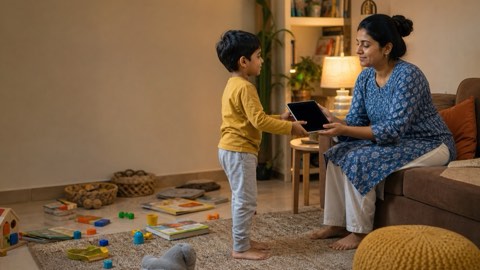
Screens can help if used deliberately: e-books, audiobook apps and free digital libraries. The problem is not the screen but the endless scroll that replaces books; a book on a device is a book.
Frequently asked questions
My child only reads comics. Should I stop buying them?
No. Comics build vocabulary, inference and reading stamina, and children who read comics generally move on to other books when ready. Keep supplying them and quietly leave other things nearby.
How much should a child read daily?
Twenty minutes of enjoyable reading daily is a good aim from primary school. Consistency matters more than quantity, and the enjoyment matters more than either.
Should I make him read aloud to me to check?
A little, and gently. Constant correction while reading aloud makes children hate it. Let mistakes that do not change the meaning go, and ask about the story rather than testing the words.
English books or regional language books?
Both, without a hierarchy. Reading in the home language builds the deeper language foundation and family connection; English reading builds the school and work language. Children handle both easily when neither is treated as a chore.
Reviewed by
- Nakul Phatak — CEO, theAsianparent India & IndonesiaHead of theAsianparent India; father of one
- Roshni Chugani — Head of Marketing, theAsianparent India & Singapore12 years in the mother-and-baby space; mother of two
Published by: theAsianparent editorial team