Moving from a bottle to a sippy cup and straw cup

Most Indian children stay on a bottle far longer than guidance suggests, and the night bottle is the one that does the damage.
The timeline
Offer a cup from around six months, alongside solids. It will mostly be played with and spilled, and that is the practice.
Aim to have stopped bottles by around 12 to 18 months. Most paediatric guidance puts the target at one year, and the longer it runs past that the harder it gets.
Cows' milk in a cup rather than a bottle from one year is the practical version of the same advice.
Bottles past two years are associated with dental decay and with drinking too much milk in place of food, which is a common cause of iron deficiency in Indian toddlers.
If you are breastfeeding, none of this applies to feeding at the breast, which has its own timeline entirely.
Which cup
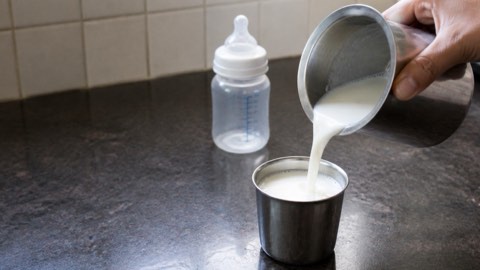
Open cup. The best for oral development and speech, and the one speech therapists prefer. Use a tiny one — a small steel katori or a shot-sized glass — with a little water, and accept the mess. Most babies manage a small open cup with help from around eight months.
Straw cup. The next best. Straw drinking uses a different, more mature tongue pattern than sucking a teat, and a weighted straw cup travels well.
Spouted sippy cup. The most popular and the least useful developmentally: the tongue action is close to a bottle, so it delays rather than replaces the habit. Fine as a short bridge, not as a destination.
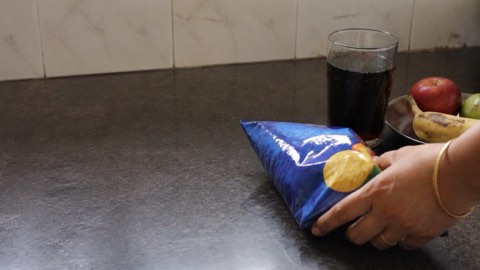
Avoid: anything the child carries around all day sipping from. Constant milk or juice exposure is what damages teeth, whatever the container.
Two cups is enough. This is another category where the shop offers a great deal more than a baby needs.

How to make the switch
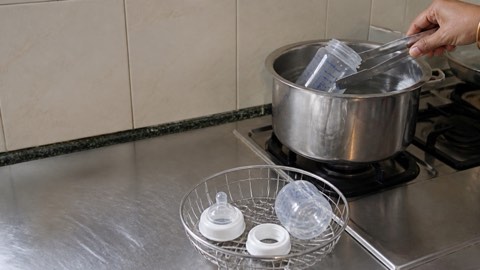
Drop one bottle at a time, starting with the daytime ones, and leave a few days between each.
Keep the last bottle — usually the bedtime one — until last, and replace it with milk in a cup as part of the same routine.
Give the cup at the start of a meal when they are thirsty, not at the end when they are full and uninterested.
Let them see you drink from a cup. Modelling does more than instruction at this age.
For a child attached to the bottle: put water in it and milk in the cup. The bottle stops being worth the effort within days.
Do not go cold turkey with a toddler who is very attached, and do not do it in the same fortnight as any other change.
When to see a doctor
See a dentist if there are white, brown or chalky marks on the front teeth — early bottle-related decay is often missed until it is advanced. A first dental visit is recommended by around one year in most guidance.
See a paediatrician if a child over one is drinking large amounts of milk and eating very little food, or is pale, tired and irritable — these point to iron deficiency, which is very common in Indian toddlers and easily missed.
Also for: coughing, choking or wet-sounding breathing during drinking, refusal of all cups, or a child who is not gaining weight after bottles are reduced.
This article is general information, not medical advice, and is no substitute for personal medical advice.
Frequently asked questions
How much milk does a toddler need?
Most guidance suggests around 300 to 500 ml a day after one year. More than that displaces food and iron.
My child will only take milk from a bottle.
Change what is in it rather than fighting over the container: milk in the cup, water in the bottle.
Is a night bottle really that bad?
Milk pooling around the teeth overnight is the classic cause of early childhood decay. If it must continue for now, brush after it rather than before.
Sippy or straw?
Straw or open cup. Spouted sippy cups are the easiest sell and the least useful.
Sources
Every clinical figure on this page is taken from the guidelines below. Where our numbers and your doctor's differ, ask which guideline they follow.
- WHO. Infant and young child feeding: model chapter for textbooks for medical students and allied health professionals (2009)Backs the guidance to introduce a cup alongside complementary foods from around six months of age.
- AAP. Healthy Habits for Healthy Kids: Weaning from the Bottle (2023)Supports the recommendation to stop bottle use by 12–18 months, transition to cow's milk in a cup from one year, and the association of prolonged bottle use with dental decay and excess milk displacing iron-rich foods.
- NICE. Maternal and child nutrition (PH11) (2008)Supports transition from bottle to cup around one year and limiting milk intake to avoid displacing solid food intake in toddlers.
- NHS. drinks and cups for babies and young children (2023)Backs the advice to introduce a free-flow or open cup from six months, aim to stop bottles by 12 months, prefer straw or open cups over spouted sippy cups for oral development, and avoid constant sipping of milk or juice to protect teeth.
Reviewed by
- Nakul Phatak — CEO, theAsianparent India & IndonesiaHead of theAsianparent India; father of one
- Roshni Chugani — Head of Marketing, theAsianparent India & Singapore12 years in the mother-and-baby space; mother of two
Published by: theAsianparent editorial team