Choosing a pram or stroller in India: what actually matters

Indian pavements, lifts and staircases decide this purchase far more than the brochure does. Here is what to check before you spend.
Decide whether you need one at all
Be honest about your daily life first. In a building with a lift, smooth corridors and a park nearby, a pram earns its place every day. In a third-floor walk-up with broken pavements outside, it becomes an expensive coat stand and a carrier does the actual work.
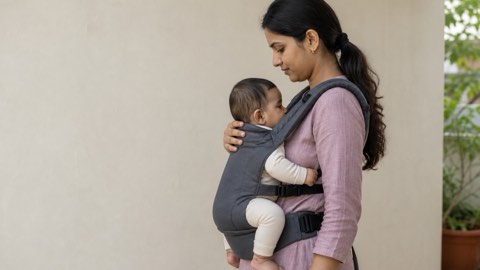
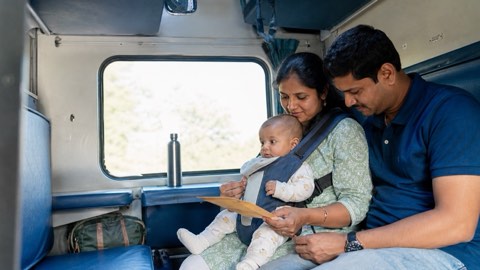
Most Indian families end up using both: a carrier for markets, crowds, temples and travel, and a pram for parks, malls, long walks and as a place the baby can nap while you eat.
A pram also earns its keep as somewhere to put a sleeping baby down outside the house, which matters more than new parents expect.
What matters
Recline: a newborn needs to lie flat or nearly flat. If you are buying for a baby under six months, a fully reclining or lie-flat pram is not optional — upright seats are for babies who can sit.
Wheels and suspension: bigger wheels and any suspension make the difference on Indian pavements. Small hard plastic wheels judder over every tile and stick in every gap.
Fold and weight: test the fold in the shop with one hand while holding something in the other, because that is how you will do it. Then check it fits your car boot, your lift and your staircase landing.
Sun and dust: a deep hood with good coverage matters more here than in most countries, and a mesh window helps in heat. A washable, removable seat cover is worth paying for — it will need washing constantly.
Brakes that lock both rear wheels, a five-point harness, and a wide stable base. Check the pram does not tip when a bag is hung on the handle, which is how most pram accidents happen.
What does not matter, and what to avoid
Skip: enormous travel systems if you have no car, cup holders and phone pockets sold as features, prams that need two hands and a knee to fold, and anything so heavy you will avoid taking it out.
Avoid second-hand prams with cracked plastic, worn brakes or a missing harness. A hand-me-down that has been well kept, though, is one of the best economies available — check the brakes, the harness and the frame joints.
For a newborn in a car, a pram is not a car seat. Only a proper rear-facing infant car seat is safe in a moving vehicle; travel-system carrycots are for the pram frame, not for driving.
Never hang heavy bags on the handle, never leave a baby unattended in a pram with the brake off, and always use the harness, even for a quick trip.
Frequently asked questions
When can my baby sit in an upright stroller?
Around six months, once they sit unsupported with steady head control. Before that, lie-flat only.
Umbrella stroller or full pram?
Umbrella strollers are light, cheap and excellent for travel and older babies; they do not recline properly and have poor suspension. Many families own a full pram and add an umbrella stroller at around a year.
Is it safe to cover the pram with a cloth so the baby sleeps?
Not with a thick cloth. Draping fabric over a pram traps heat and reduces airflow badly. Use the hood and a light muslin clipped at the side, away from the baby's face, and check the baby often in heat.
How long will we use it?
Most families use a pram until around three, and use it hardest between six months and two years.
Reviewed by
- Nakul Phatak — CEO, theAsianparent India & IndonesiaHead of theAsianparent India; father of one
- Roshni Chugani — Head of Marketing, theAsianparent India & Singapore12 years in the mother-and-baby space; mother of two
Published by: theAsianparent editorial team