Travelling with a baby in India: trains, flights and long car journeys

Travelling with a baby in India is entirely doable — it just needs different planning. Here is what actually matters, and what you can leave at home.
Before you go
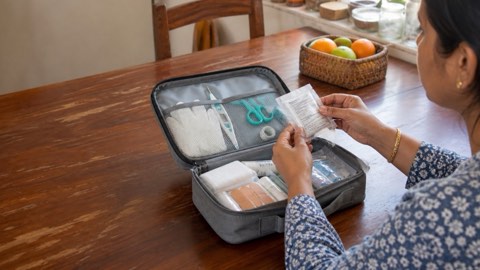
Check with the paediatrician if the baby is very young, premature or unwell, and carry a copy of the vaccination record and a note of any medical condition. Ask about travel-appropriate medicines — a fever medicine, ORS, and anything the child takes regularly, in sufficient quantity.
Time the journey around the baby: overnight trains and early flights often work better than mid-day travel with an overtired infant. Book seats that let you move — a lower berth on a train, an aisle seat on a flight, or a bassinet seat if the airline offers one.
Pack a day bag you can reach without opening luggage: nappies (more than you think), wipes, two changes of clothes for the baby and one top for you, a muslin, feeding supplies, medicines, sanitiser, a small bin bag, and a familiar comfort object.
Trains and flights
Trains: children under five travel free without a berth, and a berth can be booked for older children — book early for a lower berth. Carry your own bedding for the baby, a cloth to cover the seat, plenty of drinking water, and food you have prepared. Keep the baby away from the door and window bars, and never let a child near an open train door.
Flights: infants under two travel on a lap for a nominal fare, with a documented date of birth. Feed or offer a bottle or breast during take-off and landing — the sucking equalises ear pressure and prevents most crying. Ask for the bassinet at booking, and carry more nappies and clothes than the flight length suggests.
Airlines usually allow baby food, milk and formula in reasonable quantities through security. Most Indian airports now have baby-care rooms — ask at the information desk rather than assuming.
For both: keep hand sanitiser handy, wipe down tray tables and armrests, and avoid passing the baby around a carriage of admiring strangers during illness season.
Cars and two-wheelers
A car seat, correctly installed and appropriate for the age, is the only safe way for a baby to travel in a car. A baby in a lap becomes a projectile in a collision and can be crushed by the adult holding them — the airbag makes the front seat worse. Rear-facing in the back is the rule for infants.
Car seats are now widely available in India, and while enforcement is patchy, the physics does not care about enforcement. If a car seat is genuinely impossible, at minimum keep the baby in the back seat in an adult's arms, never in the front.
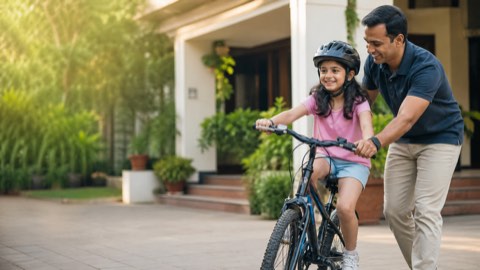
Two-wheelers: babies and small children should not travel on two-wheelers. Where it is unavoidable for older children, a properly fitted helmet is mandatory for children above four under Indian law, the child must be able to hold on and keep their feet on the footrests, and speeds should be low. A sleeping child on a scooter is an emergency waiting to happen.
Long car journeys: stop every two hours, never leave a child alone in a parked car for any length of time, use sunshades, and keep water and ORS in the car.
On the road
Feeding: breastfeeding is by far the easiest travel option — no sterilising, no temperature, no water quality question. If formula feeding, carry pre-measured powder and boiled water in a flask, and mix at the feed; never carry made-up feeds in the heat.
For older babies on solids, carry familiar dry food (khakhra, biscuits, banana, home-made snacks) and avoid street food and cut fruit. Bottled or boiled water only, including for rinsing bottles and cups.
Hygiene: a portable changing mat or an old dupatta, hand sanitiser, and wipes. Public toilets vary enormously; a mat means you can change a baby on any flat surface.
Keep routines loosely: familiar bedtime sequence, the same comfort object, and realistic expectations. Expect two or three unsettled nights after arrival and again after returning home — it is the change, not the destination.
Frequently asked questions
How young is too young to travel?
There is no fixed rule, but many paediatricians suggest waiting until after the first set of vaccinations for crowded public transport, and longer for a premature or unwell baby. Ask yours about your specific situation.
Do babies need a ticket or ID for domestic flights and trains?
Flights: infants under two need a ticket at infant fare and proof of date of birth (birth certificate or Aadhaar). Trains: children under five travel free without a berth, and ID for the child may be requested — carry a copy of the birth certificate or Aadhaar.
What if my baby cries the whole flight?
Some do. Feed on ascent and descent, walk the aisle when the seatbelt sign is off, and accept that you will not please everyone. A calm parent settles a baby faster than an anxious one, and no one on that flight will remember it next week.
Is it safe to travel to hill stations or high altitude with a baby?
Moderate hill stations are generally fine. Genuine high altitude (above about 2,500 metres) is best avoided with infants, and ascending slowly matters. Ask your paediatrician if a specific trip is planned.
Reviewed by
- Nakul Phatak — CEO, theAsianparent India & IndonesiaHead of theAsianparent India; father of one
- Roshni Chugani — Head of Marketing, theAsianparent India & Singapore12 years in the mother-and-baby space; mother of two
Published by: theAsianparent editorial team