Behaviour problems at school: a parent and teacher action plan

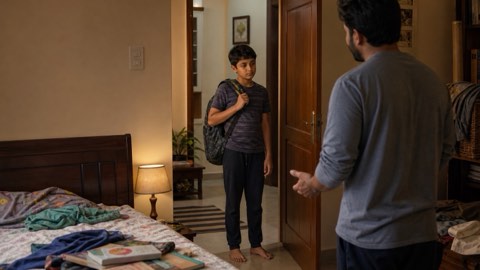
The call from school is easy to take badly. Handled well, it is the most useful information you will get about your child that term.
Before the meeting
Assume the school is describing something real, and assume they may not have the cause right. Both can be true, and starting there keeps the conversation useful.
Do not interrogate your child in the car on the way home, and do not punish before you understand. Ask open questions later: what happens in that class, who sits near you, what were you feeling.
Write down what you already know: sleep, any recent change at home, health, hearing and vision, friendships, and what the same behaviour looks like at home. Take that to the meeting.
Running the meeting
Ask for specifics rather than labels. Not 'he is disruptive' but: what exactly does he do, in which lessons, at what time of day, how often, and what happens immediately before and after. The pattern is where the answer usually is.
Ask what the school has tried, what worked even briefly, and how the behaviour compares with the rest of the class.
Share your side without defending: what you see at home, what has changed, what helps. If you disagree, say so calmly and ask for the evidence rather than dismissing it.
Leave with a written plan: two or three specific changes, who does what, a review date, and how you will be told what is happening in between. Vague goodwill produces nothing.
The causes worth checking
Physical: hearing loss (a child who cannot hear the teacher misbehaves), vision, sleep deprivation, hunger, anaemia — all common in Indian children and all fixable. A child who is short of sleep looks exactly like a child with a behaviour problem.
Academic: work too hard produces avoidance and clowning; work too easy produces boredom and the same behaviour. Unrecognised dyslexia or attention difficulties frequently present first as behaviour.
Social: bullying, exclusion, or being seated next to the wrong child. Ask about the seating plan, which is one of the cheapest interventions available.
Emotional: anxiety often looks like defiance — a child refuses because they are frightened of failing. Changes at home — a new baby, illness, conflict, a bereavement, a parent working away — show up at school first.
And the household's own model: children who are shouted at or hit at home behave that way at school. That is an uncomfortable question and it is the right one to ask.
Working the plan, and escalating
Keep the response consistent between home and school — the same two or three expectations, described the same way. Contradictory rules teach a child to work the gap.
Focus on what you want more of rather than only what you want stopped. A specific target — 'stays in his seat for the first fifteen minutes' — with brief recognition when it happens works better than a list of prohibitions.
Do not punish at home for something already dealt with at school. One consequence is enough; two teaches that reporting anything is expensive.
Escalate if there is no change in a few weeks: ask for the school counsellor, then a paediatric assessment. Persistent behaviour difficulties across settings deserve an assessment for attention, learning and emotional difficulties rather than another round of discipline.
And if a teacher is hitting, humiliating or shaming your child, that is a separate matter — corporal punishment is prohibited in Indian schools, and it should be raised in writing with the principal.
When to see a doctor
Book an assessment if: the behaviour happens in more than one setting and has lasted months; it comes with speech, reading or learning difficulty; there is aggression that injures; the child cannot sit or attend far beyond their classmates; there is a marked change in mood, sleep or appetite; or there is any self-harm or talk of not wanting to live — that last one is same-day, and Tele-MANAS on 14416 answers round the clock.
Also check hearing and vision early. They are cheap tests and they explain a surprising proportion of classroom behaviour.
This article is general information, not medical advice, and is no substitute for personal medical advice. For any decision about your or your child's health, please consult your doctor.
Frequently asked questions
The school says he is fine academically but disruptive.
Then look at boredom, seating, friendships, sleep and anxiety in that order. Academic ability does not rule out a learning or attention difficulty either.
My child says the teacher picks on him.
It happens, and children also say it when they are the problem. Ask for specifics, ask the school for their account, and observe whether the pattern is one teacher or all of them.
Should I change schools?
Rarely the first move. Work the plan first; a child who takes the difficulty with them will have the same problem in the new school. If the school will not engage at all, that is different.
He behaves perfectly at home.
Common, and it usually means school is demanding something specific — reading, sitting still, a social situation — that home does not. That is a clue rather than a contradiction.
Sources
Every clinical figure on this page is taken from the guidelines below. Where our numbers and your doctor's differ, ask which guideline they follow.
- WHO. World Report on Violence against Children (2006)Backs the claim that children who experience physical punishment at home reproduce that behaviour elsewhere, and underpins the article's recommendation to ask whether the child is hit or shouted at at home.
- AAP. Behavioral and Mental Health — HealthyChildren.org (2023)Supports the recommendations to escalate persistent behaviour difficulties to a paediatric assessment covering attention, learning, and emotional difficulties rather than continued discipline alone.
- NICE. Attention deficit hyperactivity disorder: diagnosis and management (NG87) (2019)Supports the claim that unrecognised attention difficulties frequently present first as behaviour problems, and that persistent difficulties across settings warrant formal assessment for attention and learning difficulties.
- ICMR. Consensus Statement on Management of Iron Deficiency Anaemia in Children (2018)Supports the article's identification of anaemia as a common, fixable physical cause of apparent behaviour problems in Indian children.
- MoHFW. RTE Act and Prohibition of Corporal Punishment — National Health Mission guidance on child protection (2020)Supports the statement that corporal punishment is prohibited in Indian schools and that incidents should be reported in writing to the principal.
Reviewed by
- Nakul Phatak — CEO, theAsianparent India & IndonesiaHead of theAsianparent India; father of one
- Roshni Chugani — Head of Marketing, theAsianparent India & Singapore12 years in the mother-and-baby space; mother of two
Published by: theAsianparent editorial team