The six stages of play, and what to do at each one

Children do not learn to play with others in one step. There are six recognised stages, and knowing where your child is stops you worrying about the wrong thing.
Where the six stages come from
The stages were described by the researcher Mildred Parten in the 1930s and have held up well as a rough map of how social play develops. They are a sequence rather than a timetable, and children move back and forth between them all their lives — adults do too.
The most useful thing they explain is the question almost every parent of a two-year-old asks: why does my child play beside other children rather than with them? Because that is the stage, and it is exactly where they should be.
Stages one to three
1. Unoccupied play, from birth. The baby moves, watches, kicks and explores with no apparent goal. It looks like nothing and it is how the body and senses are being mapped. What helps: floor time, safe objects, faces to watch.
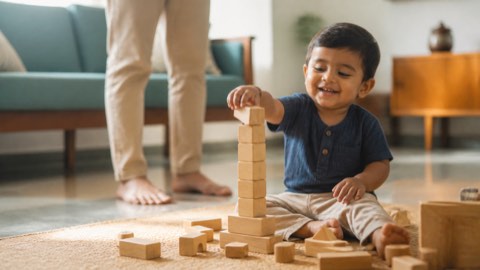
2. Solitary play, from around birth to two. The child plays alone and is absorbed, with little interest in what others are doing. Entirely healthy at any age. What helps: open-ended objects — blocks, boxes, utensils, dough — and not interrupting a child who is concentrating.
3. Onlooker play, around two. The child watches other children closely, sometimes commenting, without joining. This is learning by observation, not shyness. What helps: proximity to other children without pressure to join in, and resisting the urge to push them forward.
Stages four to six
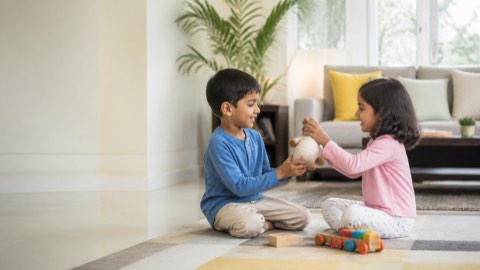
4. Parallel play, around two to three. Children play beside each other with similar toys and little interaction. This is the stage that worries parents most and needs no intervention at all. What helps: duplicates of popular toys, and an adult nearby to referee the grabbing.
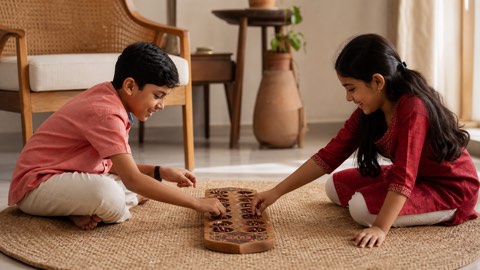
5. Associative play, around three to four. Children talk, swap toys and are interested in each other, but are still doing their own thing — no shared goal, no rules. What helps: play with a few children rather than many, and materials that invite exchange, like blocks or dough.
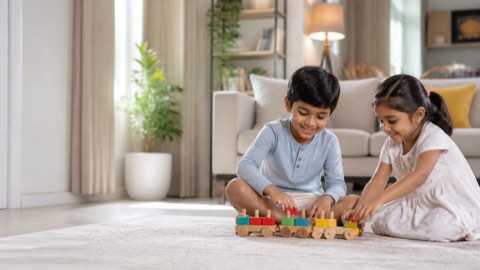
6. Cooperative play, around four onwards. A shared goal, assigned roles and rules — shops, doctors, teams, elaborate games with plots. This is where friendship, negotiation and losing gracefully are learnt. What helps: time, other children, and adults staying out of it.
What this means in practice
Do not force a two-year-old to share or a three-year-old to play a team game. Both are asking for a stage the child has not reached, and the failure is read by the child as their own.
Do give access to other children regularly from around two, even though the play looks unsocial — onlooker and parallel play are how the later stages are built.
Do worry, and ask for an assessment, if a child shows no interest in other children at all, no pretend play by around two to three, or no progress through these stages over a year. That pattern is different from being at an earlier stage.
And remember that children move between stages depending on mood, tiredness and how well they know the group. A six-year-old in a new place will happily do onlooker play for an afternoon.
Frequently asked questions
My three-year-old plays beside other children but not with them.
That is parallel and early associative play, exactly on schedule. Cooperative play arrives around four.
Should I join in my child's play?
Sometimes, following their lead rather than directing it. Also let them play alone and be bored; both are where imagination develops.
My child prefers playing alone at seven.
Solitary play is healthy at any age. The question is whether they can play with others when they want to, and whether they have at least one friendship.
Does an only child miss out on these stages?
Not if they get regular time with other children — cousins, neighbours, playschool, activities. The stages need other children, not siblings specifically.
Reviewed by
- Nakul Phatak — CEO, theAsianparent India & IndonesiaHead of theAsianparent India; father of one
- Roshni Chugani — Head of Marketing, theAsianparent India & Singapore12 years in the mother-and-baby space; mother of two
Published by: theAsianparent editorial team