Belly-button pain in pregnancy: why it happens

The navel becomes sore, sensitive and often pops outward as the bump grows. Almost all of it is stretching — with one exception worth knowing.
The ordinary causes
Stretching. The skin, muscles and connective tissue around the navel are being pulled tight, and the area is rich in nerve endings — soreness, sensitivity and a pulling sensation are all normal from the second trimester onward.
The uterus pressing forward against the abdominal wall, which is why it is often worse in the third trimester and when the baby kicks in that spot.
An outie: the navel popping outward as pressure rises. It usually returns after delivery and needs nothing done.
Friction from clothing on a suddenly protruding navel, which is easily fixed with softer waistbands and a light dressing over it.
Umbilical hernia — the one to know
The navel is a natural weak point, and pregnancy raises abdominal pressure. A small umbilical hernia — a soft bulge that may become more obvious when standing, coughing or straining — is not uncommon.
Usually it causes discomfort rather than danger and is managed conservatively during pregnancy, with repair considered afterwards if needed.
The emergency version is a hernia that becomes trapped: sudden severe pain at the site, a firm tender lump that will not push back, redness, vomiting, or no bowel movement. That is a same-hour hospital visit.
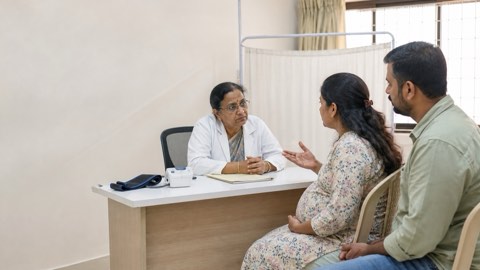
Tell your obstetrician if you notice a bulge, so it is documented and watched rather than discovered in an emergency.

Piercings, and easing the pain
Navel piercings: most women remove the jewellery as the bump grows, because the skin stretches and the site can tear or become infected. A flexible pregnancy retainer is an option; new piercings should wait until after delivery.
For ordinary soreness: soft high-waisted or under-bump clothing, a maternity support band, a light dressing over a rubbing navel, sleeping on the side with a pillow supporting the bump, and gentle moisturising for the stretched skin.
Avoid rubbing or pushing at a protruding navel, and skip the folk remedies involving coins, tape or pressure over the navel — they do nothing and can cause skin damage.
When to see a doctor
Go to hospital immediately at any stage for: heavy bleeding, severe or constant abdominal pain, a gush or steady trickle of fluid, severe headache with visual changes, sudden swelling of the face and hands, high fever, fainting, or reduced fetal movements after 28 weeks. Call 108 if you cannot travel quickly.
Same-hour: severe pain at the navel with a firm lump that cannot be pushed back, redness, vomiting, or no passage of stool or wind — that suggests a trapped hernia.
Same-day: navel pain with fever, discharge or spreading redness (infection), severe or constant abdominal pain, pain with bleeding, or pain in the upper right abdomen with headache and visual changes, which points to pre-eclampsia rather than the navel.
This article is general information, not medical advice, and is no substitute for personal medical advice. For any decision about your or your child's health, please consult your doctor.
Frequently asked questions
Will my navel go back to normal?
Usually yes over the months after delivery, though it may look slightly different permanently. A hernia may need repair afterwards.
Is the pain a sign of anything wrong with the baby?
Navel soreness from stretching says nothing about the baby. Pain with bleeding, fever or contractions is a different matter and needs assessment.
Can I use a belly band?
Yes, a soft maternity support band is fine and often helps. Avoid anything tight enough to compress the bump.
Should I remove my navel ring?
Most women do at some point in the second trimester. If it is uncomfortable, catching or the skin looks inflamed, remove it.
Sources
Every clinical figure on this page is taken from the guidelines below. Where our numbers and your doctor's differ, ask which guideline they follow.
- WHO. WHO recommendations on antenatal care for a positive pregnancy experience (2016)Backs the page's framing of routine antenatal monitoring and the importance of reporting new symptoms (bleeding, severe abdominal pain, fluid loss, severe headache with visual changes, reduced fetal movements) to a clinician promptly.
- NICE. Ectopic pregnancy and miscarriage: diagnosis and initial management (NG126) (2019)Supports the page's emergency red-flag list: heavy bleeding and severe or constant abdominal pain at any stage of pregnancy require immediate hospital attendance.
- NICE. Hypertension in pregnancy: diagnosis and management (NG133) (2019)Backs the page's same-day warning that upper-right abdominal pain combined with headache and visual changes points to pre-eclampsia rather than navel pathology, warranting urgent assessment.
- RCOG. Reduced Fetal Movements (Green-top Guideline No. 57) (2011)Supports the page's instruction to go to hospital immediately for reduced fetal movements after 28 weeks of pregnancy.
- MoHFW. Pradhan Mantri Surakshit Matritva Abhiyan — Antenatal Care Guidelines (2016)Supports the page's India-specific emergency advice to call 108 for urgent obstetric emergencies and to report danger signs including heavy bleeding, severe pain, and fever to healthcare providers without delay.
Reviewed by
- Nakul Phatak — CEO, theAsianparent India & IndonesiaHead of theAsianparent India; father of one
- Roshni Chugani — Head of Marketing, theAsianparent India & Singapore12 years in the mother-and-baby space; mother of two
Published by: theAsianparent editorial team