Pregnancy week 2: ovulation week — this is the real window

By the count this is week two, but the real event comes at its end — ovulation. If a pregnancy is the plan, this is the week that matters.
The period has gone, and the body is at work
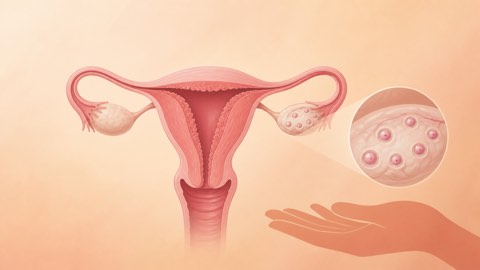
The period has ended and the body has moved to the next task without announcing it. The uterine lining thickens daily, and in the ovary one follicle has pulled ahead of the rest and is ripening.
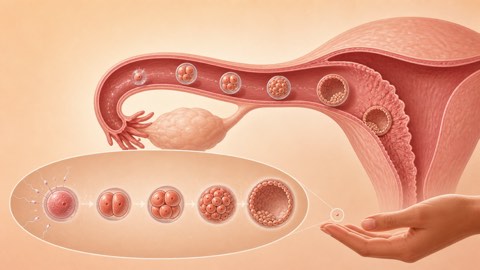
At this week's end — around day 14 of a 28-day cycle — that egg releases. That is ovulation, and the whole story of conception turns on the day or two around it.
Note the counting quirk again: on paper this is pregnancy week two, but conception hasn't happened yet. It happens at this week's end or the next's beginning — and even then, the paperwork will say you're two weeks along.
Your baby this week
There's still no baby — but its first half, the egg, is at its readiest this week. Once mature, it leaves the ovary for the fallopian tube and waits there for 12 to 24 hours.
If sperm meet it in that window, fertilisation happens. Sperm survive in the body up to five days, so the days before ovulation count too.
Whether the child is a boy or a girl is decided at that very moment — by the sperm's X or Y chromosome. It is decided by the father's side, and nobody controls it. Getting that clear in the household spares a lot of nonsense later.
Read next

Changes in your body
Around ovulation the body signals. The most reliable is cervical mucus — in these days it turns thin, slippery and stretchy, like raw egg white.
Some women feel a light one-sided twinge low in the belly, some a fullness in the breasts. And many feel nothing at all — equally normal.
Desire also tends to rise these days — the body's own arrangement. Practically, for the couple: intercourse every two-three days through this window, without clocks and calendars turning it into a project.
What to do this week
Keep the daily folic acid going — this is the very week it was started early for. The tube that begins forming right after conception needs it already in the body.
Use the ovulation calculator for the fertile-day arithmetic — and treat it as an estimate. With irregular cycles, the mucus signal outranks the calendar.
If lubricant is part of the picture, know that many brands slow sperm — during the trying months, skip them or use one labelled sperm-friendly.
Both partners' plates stay simple and complete — dal, greens, seasonal fruit, milk. No 'conception boosters', powders or courses — none has evidence, and some do harm.
Week 2 at a glance
The week's essentials in one place. Days shift with your cycle length.
| Item | In week 2 |
|---|---|
| Main event | Ovulation at week's end — the egg releases |
| Egg's lifespan | Only 12-24 hours after release |
| Sperm's lifespan | Up to 5 days — earlier days count too |
| Best days | The two days before ovulation, and the day itself |
| Body's signal | Stretchy egg-white cervical mucus |
| Keep going | Folic acid 400 mcg daily |
| Keep away | Tobacco, alcohol, self-medication, evidence-free courses |
When to see a doctor at once
Nothing urgent this week either. But if the one-sided ovulation-time pain is severe and unbearable every cycle, or there's bleeding in these days, have a gynaecologist take a look — cysts and infections are worth ruling out.
And a reminder: ovulation strips read false-positive again and again in PCOS. If months of positive strips haven't brought a pregnancy, the money is better spent on a consultation than on more strips.
This article is general information only and no substitute for personal medical advice. The person who can advise you knowing your health, your medicines and your previous pregnancies is your obstetrician, or the doctor at your nearest health centre.
Work out your due date
Enter the first day of your last period and your cycle length — your estimated due date, this week's count and the anomaly scan window all appear right here.
It is only an estimate — most babies aren't born on the exact date. A first-trimester scan dates a pregnancy more accurately; in the end, your doctor's date is the one that counts.
Frequently asked questions
Is ovulation always on day 14?
Only in a 28-day cycle. The real rule: about 14 days before the next period. A 32-day cycle ovulates around day 18.
How soon can I know if I conceived?
A home test is reliable once the period date has passed — about two weeks from now. Earlier tests can read falsely negative.
Does daily intercourse raise the odds?
No; every other day is enough and keeps sperm counts healthier. The scheduled-daily grind adds stress that works against you.
Can we choose a boy or a girl somehow?
No. There is no scientific basis for sex selection by timing, diet or remedy — and in India both testing and selecting are crimes under the PCPNDT Act.
Sources
Every clinical figure on this page is taken from the guidelines below. Where our numbers and your doctor's differ, ask which guideline they follow.
- WHO. WHO recommendations on antenatal care for a positive pregnancy experience (2016)Backs the recommendation that folic acid supplementation should begin before conception and continue in early pregnancy to prevent neural tube defects, supporting the page's instruction to keep taking daily folic acid during the ovulation week.
- ACOG. ACOG Committee Opinion No. 762: Prepregnancy Counseling (2019)Supports the claim that folic acid should already be in the body before conception, and backs the advice that no unproven 'conception booster' supplements have evidence of benefit.
- NICE. Fertility problems: assessment and treatment (CG156) (2013)Supports the recommendation of intercourse every two to three days around the fertile window rather than daily, the claim that many commercial lubricants can impair sperm motility, and the note that PCOS is associated with unreliable ovulation predictor kit results.
- CDC. Folic Acid — Recommendations (2022)Supports the page's emphasis on taking folic acid before and at conception so it is already present when the neural tube begins forming shortly after fertilisation.
Reviewed by
- Nakul Phatak — CEO, theAsianparent India & IndonesiaHead of theAsianparent India; father of one
- Roshni Chugani — Head of Marketing, theAsianparent India & Singapore12 years in the mother-and-baby space; mother of two
Published by: theAsianparent editorial team