How parents can support toddler and preschool friendships

Friendship at three does not look like friendship at eight. Knowing what it should look like stops parents solving problems that do not exist.
What friendship looks like at this age
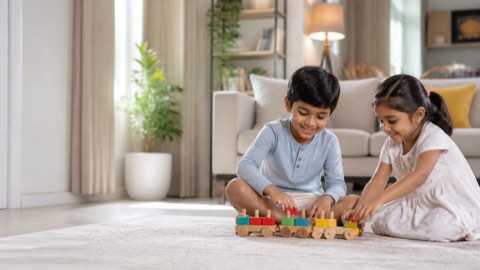
At two, children play beside each other rather than with each other, and 'friend' mostly means the person who is there. That is parallel play and it is exactly right.
At three, they begin to talk, swap and take an interest in each other while still doing their own thing. Friendships are based on proximity and change weekly.
At four and five, real cooperative play appears: shared games, roles, rules, and a preferred friend. This is when friendship starts to mean something to the child.
So a two-year-old who does not have friends is not behind, and a three-year-old whose best friend changes every week is entirely normal.
Playdates that work
One child, ninety minutes, and end it while it is still going well. Three children at this age means two pair up and one is left out.
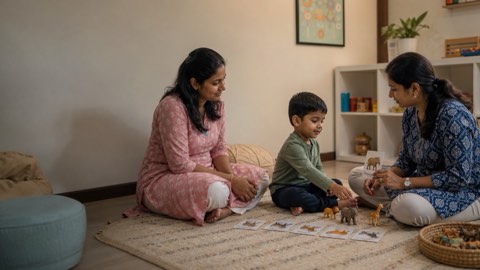
Have something ready for the first ten minutes — dough, blocks, water play — then let it go free. Unstructured from minute one is hard.
Put away the two or three things your child cannot bear to share, before the guest arrives.
Stay close enough to intervene early. At two and three, an adult within arm's reach prevents most incidents; hovering, though, prevents the children from working anything out.
Feed them. Most playdate meltdowns are hunger with a timestamp.
How much to step in
Intervene immediately for anything physical or for a child who is genuinely distressed. For everything else, describe rather than solve: 'two children, one truck' — and wait a moment.
Give the words: 'my turn next', 'I don't like that', 'can I play?'. Rehearse them at calm moments rather than mid-fight.
Do not force sharing, do not force apologies, and do not force a shy child into a group. All three teach compliance rather than skill.
And keep your own commentary quiet: children pick up 'he doesn't have friends' faster than any lesson you intend.
Frequently asked questions
My three-year-old plays alone at preschool.
Common and usually fine, particularly in the first months. Ask the teacher whether he is content or excluded — the two look similar from a distance and need different responses.
She has one friend and no interest in others.
That is enough at this age, and it is protective. Numbers are not the measure.
He always wants to be in charge and the others walk away.
Very common at four. Coach one skill: asking rather than telling, and taking a turn at someone else's game. Practise at home where the stakes are low.
Should I arrange playdates with the popular child?
Better to choose a child with similar interests or a quieter one. Friendship at this age is built on shared play, not status.
Reviewed by
- Nakul Phatak — CEO, theAsianparent India & IndonesiaHead of theAsianparent India; father of one
- Roshni Chugani — Head of Marketing, theAsianparent India & Singapore12 years in the mother-and-baby space; mother of two
Published by: theAsianparent editorial team