Good manners for children: what to teach at each age

Manners are taught by modelling and repetition rather than by public correction — and expecting a three-year-old to greet a room full of relatives is expecting the wrong thing.
By age
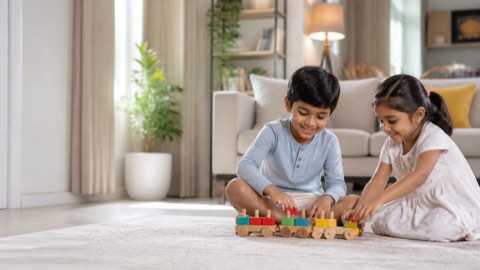
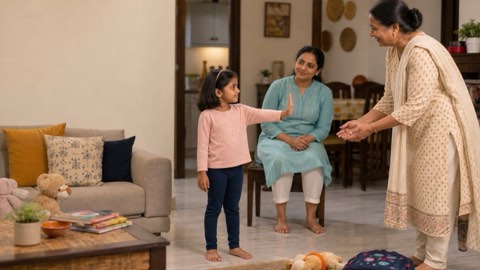
2-3: please and thank you, prompted every time and not yet reliable. Waving hello and goodbye. Not snatching — with adult help, because it is beyond them alone.
4-5: greeting familiar people, saying sorry, waiting for a turn, not interrupting for a short period, basic table behaviour, and washing hands before eating.
6-8: greeting adults unprompted, using please and thank you without reminders, asking before taking, sharing, saying excuse me, and simple phone manners.
9-12: introducing themselves, thanking a host, offering to help, giving up a seat, writing or sending a thank-you message, and managing themselves as a guest in someone else's home.
Above all: the manners you model. Children copy how adults speak to waiters, drivers, domestic staff and each other far more accurately than they follow any instruction.
Teaching without nagging
Model it, name it, practise it. Say please and thank you to your children, out loud, all day. Then name what you are doing — 'I said thank you because she helped us.'
Prompt privately rather than publicly. Correcting a child in front of relatives produces embarrassment rather than manners, and the memory of the humiliation outlasts the lesson.
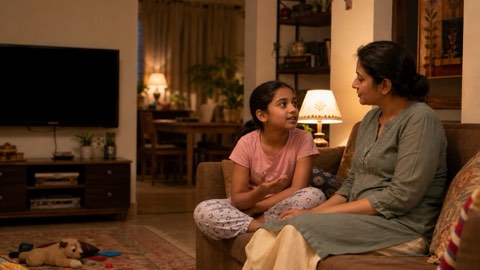
Practise at home in low-stakes moments — role-play greeting a guest, answering the phone, being introduced.
Notice out loud when it happens: 'you thanked her without being asked.' Attention given to the behaviour you want is what makes it repeat.
And accept the age. A shy four-year-old who cannot greet a room is not rude; they are four and overwhelmed. A quiet wave from behind your leg is a success.
The Indian specifics
Respect for elders is taught in most families through touching feet, greeting formally and speaking politely. All of that is compatible with the modern rule that a child does not have to be hugged or kissed — respect and forced physical affection are different things, and separating them protects the child. See our guide on consent and hugging.
Table manners in a family that eats with hands, on the floor or in shifts: teach the version your household actually uses, plus washing hands before and after, not talking with a full mouth, and waiting for elders to start where that is the custom.
Guests: children are usually expected to greet, offer water and then disappear. Teach the greeting and the offer; the disappearing takes care of itself.
And the one worth adding in every Indian household: politeness to domestic staff, drivers and delivery workers, in the same words used for anyone else. That is the manners lesson children absorb most accurately and adults model least consistently.
Frequently asked questions
My child refuses to greet guests.
Prompt once, quietly, then let it go and try again privately later. Forcing it in front of an audience makes it worse, reliably.
Should I make her touch feet?
That is a family decision. If you keep it, keep the child's right to decline a hug or a kiss separately, so respect and bodily autonomy do not get bundled together.
How do I teach phone manners?
Model it: no phone at the table, greeting people rather than talking through them, and asking before taking someone's photograph.
What about thank-you notes for gifts?
Worth teaching from about six, in whatever form the family uses — a message, a call, a note. It takes two minutes and children who do it become adults who do it.
Reviewed by
- Nakul Phatak — CEO, theAsianparent India & IndonesiaHead of theAsianparent India; father of one
- Roshni Chugani — Head of Marketing, theAsianparent India & Singapore12 years in the mother-and-baby space; mother of two
Published by: theAsianparent editorial team