Homemade or packaged baby food in India?

Packaged baby food is convenient, expensive and heavily marketed. Homemade is cheaper and mostly better, and there are situations where the packet wins.
What is in the packet
Commercial infant cereals are usually cereal flour with added iron, vitamins and minerals. The fortification is genuinely useful — added iron is the strongest argument for them, in a country where infant iron deficiency is widespread.
Added sugar is the main objection. Many products aimed at Indian infants have contained added sugar, and this drew significant public attention when international comparisons showed the same brands selling sweetened versions in India and unsweetened ones elsewhere. Read the ingredient list rather than the front of the pack, and check for sugar, sucrose, maltodextrin and fruit concentrate.
Salt should not be added to anything for a baby under one, and generally is not in infant products — but it is in many of the biscuits, puffs and snacks marketed alongside them.
Texture is the quiet cost: packet food is uniformly smooth, and babies need to progress through lumps and finger foods on time. A child kept on smooth purée past nine months often becomes harder to feed later.
And read the age on the box. Products for older babies and toddlers are marketed alongside infant ones and are frequently much sweeter.
What the law says
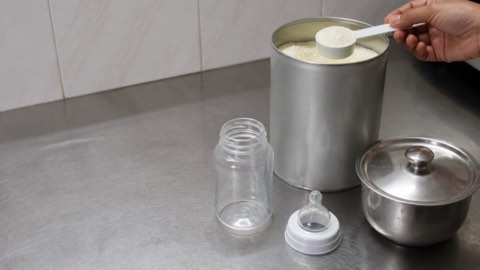
The Infant Milk Substitutes Act (IMS Act) restricts the marketing of infant milk substitutes, feeding bottles and infant foods for babies under two in India. Advertising them, offering free samples, promoting them through health workers, and using pictures that idealise their use are all prohibited.
Labels are required to state that breastfeeding is best and to carry specific warnings.
In practice, marketing that skirts these rules is everywhere — through influencers, through 'brand ambassador' arrangements, and through toddler products that share branding with infant ones. Assume that anything you have seen advertised has been advertised to you deliberately.
FSSAI regulates the composition and labelling of foods for infants. A licence number on the pack is a minimum, not a recommendation.
When each one makes sense
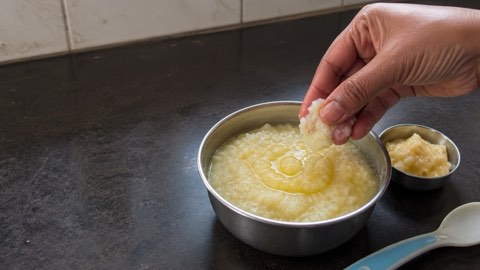
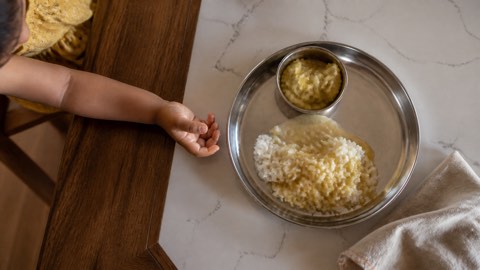
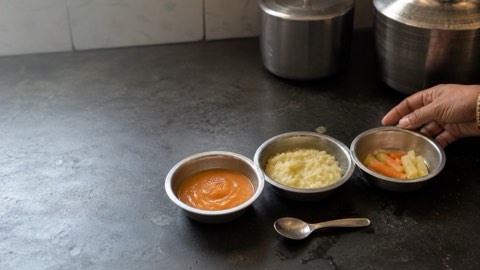
Homemade wins on cost, texture progression, family flavours, and knowing exactly what is in it. Ragi porridge, dal water and khichdi, mashed vegetables with ghee, curd, and soft fruit cover most of the first year at a fraction of the price.
For iron, homemade needs thought: ragi, dal, green leafy vegetables and eggs, with a vitamin C food alongside. Most paediatricians in India will also recommend an iron supplement in the first year, which is a more reliable route than diet alone.
Packaged genuinely wins for: travel, a caregiver who cannot cook safely, a household without reliable refrigeration, an emergency, or a specific medical need such as a hypoallergenic formula prescribed for cows' milk protein allergy.
A reasonable middle position, and the one most families land on: home food as the base, a fortified cereal for iron if the paediatrician suggests it, and packet snacks kept as occasional rather than routine.
Hygiene matters more than the source. Freshly cooked food, served warm, prepared with clean hands and clean water, and not left standing at room temperature.
When to see a doctor
See a paediatrician before starting any formula or specialised infant food — including so-called hypoallergenic or soy formulas — rather than switching on advice from a shop or a relative.
Ask about iron and vitamin D supplementation at the six-month visit rather than assuming food covers it.
See a doctor for: poor weight gain, persistent vomiting or diarrhoea after a new food, blood in stool, a rash or swelling after eating, or a baby who is not progressing to lumpier textures by around nine to ten months.
This article is general information, not medical advice, and is no substitute for personal medical advice.
Frequently asked questions
Is packaged cereal bad for my baby?
Not inherently. The iron fortification is useful and the added sugar in some products is not. Read the ingredients and check the age band.
Is homemade food iron-sufficient?
It can be with attention, and most Indian paediatricians still recommend a supplement in infancy. Ask yours.
Which is cheaper?
Homemade, by a very wide margin.
The tin says no added sugar.
Then check for maltodextrin, fruit concentrate and honey, which are sugars by another name. Honey should not be given at all before one year.
Sources
Every clinical figure on this page is taken from the guidelines below. Where our numbers and your doctor's differ, ask which guideline they follow.
- WHO. Guideline: Sugars intake for adults and children (2015)Backs the page's warning against added sugars (sugar, sucrose, fruit concentrate, maltodextrin) in foods marketed to infants and young children.
- WHO. Complementary feeding: family foods for breastfed children (2000)Supports the page's guidance that infants should progress through varied textures including lumps and finger foods and that remaining on smooth purées beyond nine months can impair acceptance of family foods.
Reviewed by
- Nakul Phatak — CEO, theAsianparent India & IndonesiaHead of theAsianparent India; father of one
- Roshni Chugani — Head of Marketing, theAsianparent India & Singapore12 years in the mother-and-baby space; mother of two
Published by: theAsianparent editorial team