School bus, classroom and playground safety: the checklist to run

Most school safety is decided by things you can check in one meeting — and by a handful of rules your child needs to know by heart.
The school bus
Ask, in writing: is there a female attendant on the bus (required in many states), is the driver police-verified with a valid licence and no history of violations, is there a first-aid kit and a fire extinguisher, is the bus GPS-tracked with a working CCTV, are the doors closed while moving, and what is the maximum number of children per seat?
Check yourself: the bus should have a proper door that latches, grilles on windows, a working speed governor, and no children standing. Supreme Court and state transport guidelines cover much of this, and compliance varies.
Ask about the route: how long is your child on the bus, who is the last child dropped, and what happens if nobody is at the stop. The answer to that last question matters more than parents expect.
Teach your child: stay seated, no hands or head out of the window, wait for the bus to stop completely, never cross in front of a bus that is about to move, and tell an adult if the driver or attendant behaves in a way that makes them uncomfortable.
The classroom and the building
Ask about: staff police verification, the ratio of adults to children, whether CCTV covers corridors and common areas, the policy on who may collect a child, how visitors are logged, and whether toilets are separate, clean and supervised for younger children.
Ask directly whether the school has a written child protection policy and a committee, and how a complaint is handled. Under POCSO, schools have obligations; a school that cannot answer this is telling you something.
Corporal punishment is prohibited in Indian schools. Ask what the discipline policy is, and raise it in writing with the principal if your child reports being hit or humiliated.
Practical items: a first-aid room and a trained person, an emergency contact process, fire safety equipment and drills, safe drinking water, and what happens when a child falls ill mid-day.
The playground and games
Look at the surface under climbing equipment — sand, rubber or grass rather than concrete — and at the equipment itself for rust, sharp edges, loose bolts and gaps a head could pass through.
Ask about supervision ratios during break, which is when most school injuries happen, and about what happens after an injury: who assesses it, who calls you, and how quickly.
Check shade and water access. Heat exhaustion during outdoor games in an Indian summer is common and preventable.
For sport, ask about protective equipment, whether coaches are trained in first aid, and whether there is a policy on head injuries — a child who takes a knock to the head should not simply be sent back on.
What your child should know by heart
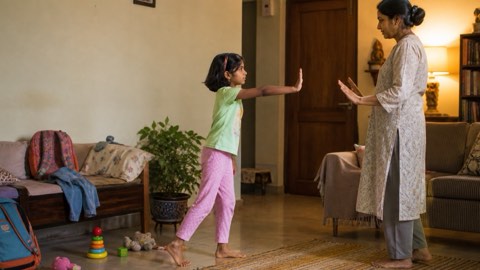
Their own full name, your name, and at least one phone number — by around five. Written inside the bag as backup.
Who is allowed to collect them, and that they never go with anyone else however plausible, including someone claiming you sent them. Agree a family code word, and tell the school.
Body safety in the school context: the swimsuit rule, that no adult should ask them to keep a secret from parents, and that they can tell you anything without being in trouble. Our body-safety guide has the words.
That they must tell an adult if they are hurt, frightened, bullied, or if another child is. And that if the first adult does not listen, they tell the next one — that instruction is the one that matters most.
Road rules for the school gate, which is the most dangerous fifty metres of the day: cross at the crossing, look both ways, no running out from between parked vehicles.
When to see a doctor
Emergency after any school injury: loss of consciousness even briefly, repeated vomiting, drowsiness or confusion, a fit, unequal pupils, fluid from the nose or ears, a limb that cannot be used, or any breathing difficulty. Call 108.
Same-day: a head injury with any symptoms at all, a wound needing stitches, an animal bite (wash for fifteen minutes and go the same day for rabies assessment), a burn, or heat exhaustion. And take seriously any child who says they were hurt by an adult at school — that needs both medical and formal follow-up, and Childline is 1098.
This article is general information, not medical advice, and is no substitute for personal medical advice. For any decision about your or your child's health, please consult your doctor.
Frequently asked questions
The school will not answer my questions in writing.
That is itself an answer. Put the questions in an email so there is a record, escalate to the school management, and involve the parents' association — collective questions get answered faster than individual ones.
My child says the bus attendant shouts at the children.
Report it in writing to the school and ask what action is taken. Shouting is a discipline issue; anything physical or sexual is a POCSO matter and goes to the police, with Childline on 1098.
How do I check the driver's record?
Ask the school for confirmation that police verification and licence checks have been done, and ask when they were last renewed. You are entitled to ask.
Is it reasonable to ask for CCTV footage after an incident?
Yes, in writing. Schools may have policies about viewing it, and asking creates a record either way.
Sources
Every clinical figure on this page is taken from the guidelines below. Where our numbers and your doctor's differ, ask which guideline they follow.
- WHO. WHO Guidelines on Physical Activity, Sedentary Behaviour and Sleep for Children under 5 Years of Age (2019)General backdrop for child safety and wellbeing standards referenced in the context of playground supervision and physical activity safety.
- NHS. Rabies — NHS (2023)Supports the instruction to wash an animal bite wound for fifteen minutes and seek same-day rabies assessment.
Reviewed by
- Nakul Phatak — CEO, theAsianparent India & IndonesiaHead of theAsianparent India; father of one
- Roshni Chugani — Head of Marketing, theAsianparent India & Singapore12 years in the mother-and-baby space; mother of two
Published by: theAsianparent editorial team