Winter with a baby: warmth without overheating, and the season's real risks

Indian winters bring two opposite risks — an under-dressed baby in an unheated house, and an over-bundled one with a heater burning oxygen in a closed room. Here is the balance.
Dressing without overheating
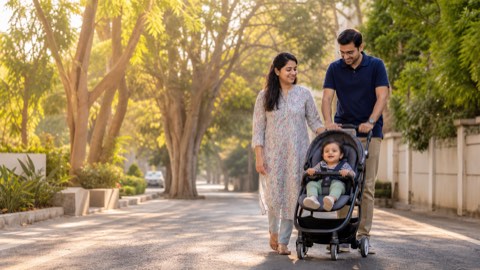
The rule: one light layer more than an adult is comfortable in. Layers work better than one thick garment because they can be removed as the day warms — and Indian winters swing widely between morning and afternoon.
Check for overheating rather than cold: feel the back of the neck or the chest, not hands and feet, which are normally cooler. A sweaty neck, flushed face, rapid breathing or a heat rash means too many layers. Overheating a sleeping baby is a genuine risk, not a fussy concern.
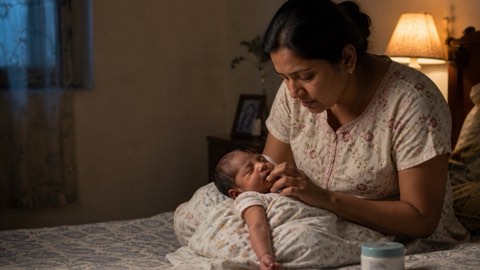
For sleep: dress the baby in layers rather than using loose heavy quilts, which can cover the face. A sleeping bag or a snugly tucked light blanket to chest level is safer. Caps are for outdoors — a baby indoors in a cap loses the ability to regulate heat through the head.
Heaters, and the air in the room
Coal or wood angeethis and unvented kerosene or gas heaters burn oxygen and produce carbon monoxide — every winter in India brings deaths from closed rooms. Never use them in a sleeping room, and always keep ventilation open.
Electric heaters and blowers are safer but dry the air severely and can cause burns. Keep them well away from the cot, never leave them running unattended in a baby's room, and put a bowl of water in the room or use a humidifier to offset the dryness.
Whatever the heat source, keep a window or vent slightly open. A completely sealed heated room is the specific arrangement that causes harm.
The other winter air problem, particularly in north India: outdoor pollution peaks in the winter months. On high-pollution days, keep small children indoors during the worst hours, avoid outdoor exercise, use an air purifier if you have one, and take asthma and wheezing more seriously than usual.
Skin, bathing and massage
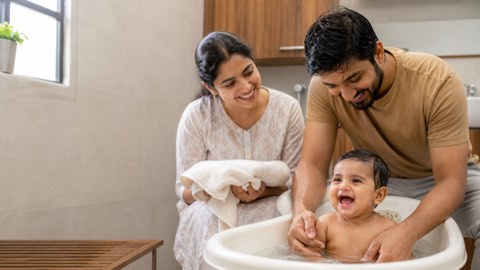
Winter dries baby skin quickly. Bathe with warm rather than hot water, keep it short, and moisturise while the skin is still damp. Two or three baths a week is plenty in cold weather, with daily face, hands and nappy-area cleaning.
Oil massage before the bath is comfortable and useful in winter — coconut or sesame oil, warmed in the palms, in a warm draught-free room. Dry the baby immediately and dress before any chill sets in.
For eczema-prone skin, winter is the hard season: fragrance-free moisturiser applied twice daily or more, cotton next to the skin (wool over a cotton layer, never directly), and a doctor's advice if the skin is cracked, weeping or infected.
Sunning a baby for vitamin D is traditional and reasonable in winter — brief morning exposure, not in the eyes, and not as a substitute for the vitamin D drops most Indian paediatricians prescribe.
When to see a doctor
Emergency: difficulty breathing, fast breathing, the chest sucking in below the ribs, grunting, blue lips or tongue, a child too breathless to feed; a baby who is unusually cold, floppy or hard to wake; suspected carbon monoxide exposure (headache, dizziness, nausea, drowsiness in several people in the same room — get everyone into fresh air and call 108); or a burn from a heater.
Same-day: any fever in a baby under three months; fever over 39°C or lasting beyond three days; wheezing or a barking cough with noisy breathing; ear pain or discharge; refusing feeds; or skin that is cracked, weeping or infected.
This article is general information, not medical advice, and is no substitute for personal medical advice. For any decision about your or your child's health, please consult your doctor.
Frequently asked questions
Does cold weather cause colds?
Viruses do. Winter crowds people indoors, which spreads them. Warm clothing prevents discomfort and hypothermia, not infection — so a well-wrapped baby can still catch a cold, and it is not a failure of wrapping.
Should I stop bathing my baby in winter?
No. Reduce frequency to two or three times a week, warm the room, work quickly, and dry and dress immediately. A clean baby is not the risk; a chilled one is.
Is it safe to sleep with a heater on all night in the baby's room?
Not with any combustion heater, ever. An electric heater or blower can be used with ventilation, well away from the cot and ideally on a thermostat — but the safest arrangement is warming the room before bed, switching it off, and dressing the baby in layers.
How do I protect my child from winter pollution?
Watch the local air quality index, keep outdoor play for the cleaner hours, avoid main roads at peak traffic, keep the home smoke-free (including incense, coils and cooking smoke), and use a purifier in the sleeping room if affordable. Masks are impractical for small children and unsuitable for babies.
Sources
Every clinical figure on this page is taken from the guidelines below. Where our numbers and your doctor's differ, ask which guideline they follow.
- WHO. WHO guidelines for indoor air quality: household fuel combustion (2014)Backs the claim that coal, wood, and unvented kerosene or gas heaters produce carbon monoxide and pose a lethal risk in closed rooms, and that ventilation must be maintained.
- NHS. Reducing the risk of sudden infant death syndrome (SIDS) (2023)Backs the claims that overheating a sleeping baby is a genuine risk, that loose heavy quilts and bedding covering the face are unsafe, that a sleeping bag or snugly tucked light blanket to chest level is safer, and that the back of the neck or chest (not hands and feet) is the correct place to check for overheating.
- NICE. Eczema in under 12s: atopic eczema diagnosis and management (CG57) (2007)Backs the eczema-prone skin advice: frequent application of fragrance-free emollient, keeping cotton next to the skin, and seeking medical advice for cracked, weeping or infected skin.
- IAP. IAP Guidelines on Vitamin D and Calcium in Children (2017)Backs the recommendation that most Indian paediatricians prescribe vitamin D drops for infants, and that brief morning sun exposure is reasonable but not a substitute for supplementation in the Indian context.
Reviewed by
- Nakul Phatak — CEO, theAsianparent India & IndonesiaHead of theAsianparent India; father of one
- Roshni Chugani — Head of Marketing, theAsianparent India & Singapore12 years in the mother-and-baby space; mother of two
Published by: theAsianparent editorial team